
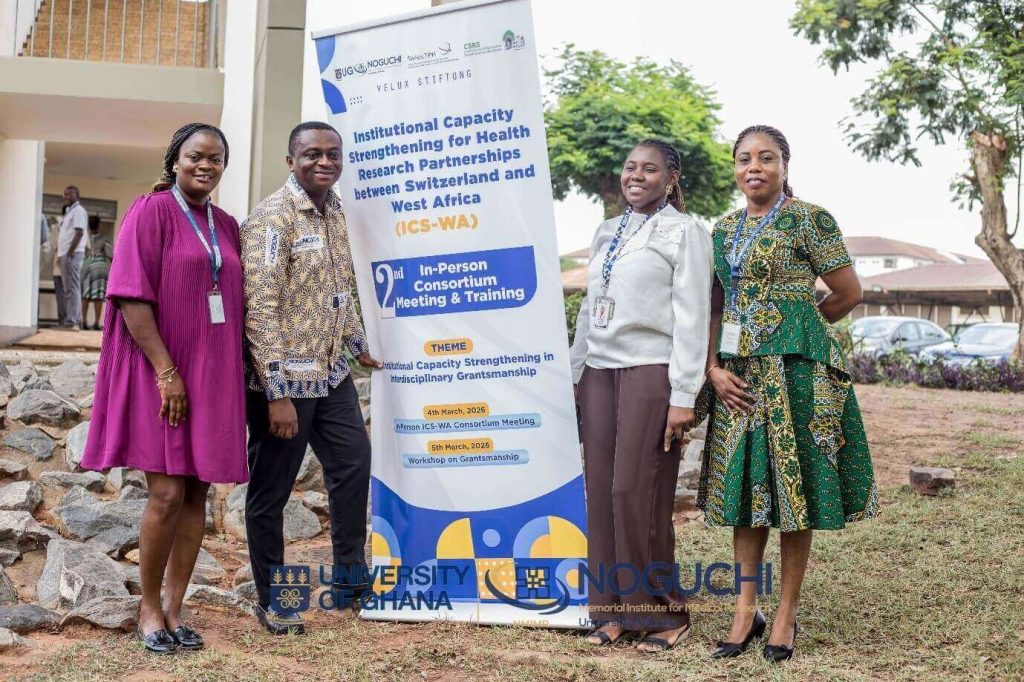
In a move to build stronger institutions, better‑prepared researchers, and more competitive grant systems capable of driving impactful health research across the region, the Institutional Capacity Strengthening for Health Research Partnerships between Switzerland and West Africa (ICS‑WA), with funding support from the Velux Stiftung, convened its second consortium meeting and workshop for consortium members.
The event, held from March 5–6, 2026, at the Noguchi Memorial Institute for Medical Research (NMIMR), brought together partners from NMIMR, the Swiss Tropical and Public Health Institute (Swiss TPH), and the Centre Suisse de Recherches Scientifiques (CSRS) in Côte d’Ivoire.
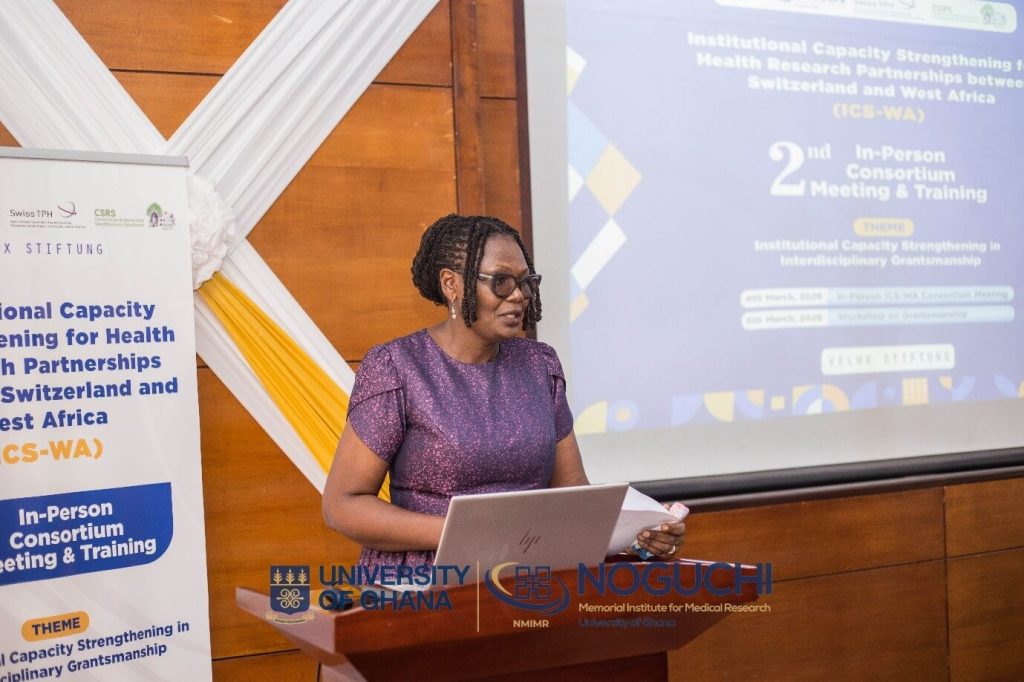
Prof. Anita Ghansah, Head, Department of Parasitology, NMIMR
The meeting was opened with a welcome address by Prof. Anita Ghansah on behalf of the Director of NMIMR. In her welcome remarks, Prof. Anita Ghansah highlighted that the consortium reflects a shared commitment to strengthening both the research and administrative capacities of the partner institutions.
She noted that the second in‑person consortium meeting was particularly significant, as it brought together research scientists, postdoctoral fellows, early‑career researchers, as well as administrative and finance professionals. The meeting/workshop, she explained, was designed as a training platform to equip participants with the skills needed to thrive in an increasingly competitive global research environment.
Prof. Ghansah further emphasized that the meeting’s objectives were both timely and critical, as they seek to empower researchers and administrative teams with the knowledge required to remain competitive in applying for and effectively managing research funding.
Dr. Stephen Osei‑Wusu, Co‑Principal Investigator, explained that the project is jointly led by experienced researchers, with Dr. Michael Käser serving as the Principal Investigator and Dr. Kanny Diallo as Co‑Principal Investigator.
Dr. Osei‑Wusu noted that the collaboration reflects a shared commitment to advancing research excellence and building sustainable partnerships between institutions in the Global North and West Africa.
The four‑year project, which runs from September 2024 to August 2028, aims to develop standardized research procedures across partner institutions while introducing a sustainable training‑of‑trainers’ model. This approach is expected to strengthen internal capacity and ensure the effective transfer of knowledge and skills within and beyond the participating organizations.
He stressed that, at its core, the ICS‑WA project seeks to strengthen institutions’ capacity to design competitive research proposals and secure international funding. By fostering collaboration and shared learning, the initiative is also expected to create expanded opportunities for joint research projects that address critical health challenges in the region.
The event served as a comprehensive training and capacity‑building platform for research scientists, early‑career investigators, postdoctoral fellows, and administrative professionals.
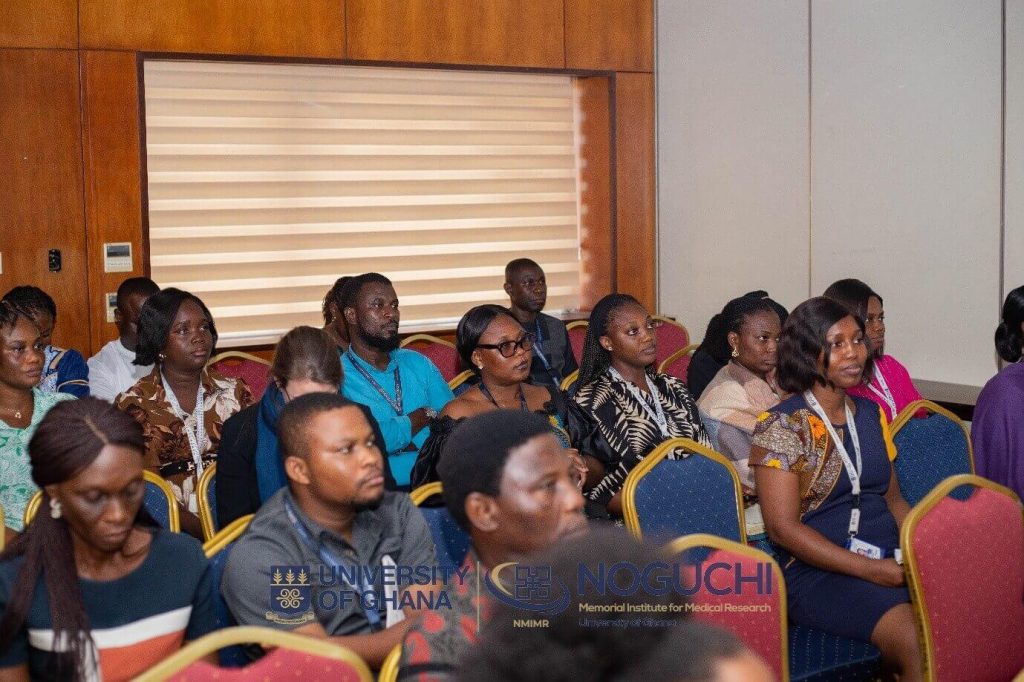
Cross section of participants at the training meeting
A major focus of the meeting/workshop was helping participants better understand the increasingly competitive international grant landscape, particularly funding opportunities under EDCTP3 and Horizon Europe. Through a series of technical sessions, speakers, including Prof. Yeboah Manu, Dr. Michael Käser, Dr. Mariam Bolz, Dr. Gilbert Fokou, Nana Oye Akuffo, Pamela Nai, Mrs. Griselda Osae Amoako and Afia Adoma Baokye provided practical guidance on designing and submitting successful grant proposals.
Participants were encouraged to begin proposal development early, align research ideas closely with funder priorities, and build strong, multidisciplinary consortia with clearly defined roles. Presenters emphasized that success in today’s funding environment depends not only on scientific excellence, but also on clear impact pathways, realistic implementation plans, policy relevance, and credible partnerships.
Experts also highlighted the importance of understanding the funder’s perspective, noting that competitive proposals must demonstrate excellence, impact, and feasibility simultaneously.
Overall, the two‑day meeting and workshop provided an essential platform for strengthening collaboration, refining strategic priorities, and advancing institutional capacity for health research across Switzerland and West Africa. The event enabled partners to deepen their shared understanding of the project’s goals and reaffirm their commitment to building sustainable research ecosystems through strengthened administrative systems, enhanced scientific skills, and unified operational frameworks.