
Clinical Immunology Infrastructure at NMIMR
The Department of Immunology at NMIMR has years of experience with clinical immunology and supports the conduct of in-house immunological analysis of clinical samples. We are more than just a biomedical research department. We also conduct clinical trials which are an essential step in turning promising laboratory discoveries into safe, effective treatments that can prevent, detect or cure diseases. Our state-of-the-art facilities and team allow us to manage a wide range of studies, from the first evaluations of new investigational products to large-scale trials that confirm their benefit for the public.
We provide the expertise and infrastructure necessary to conduct safe and efficient testing of samples from clinical trials. All trial-related equipment have the necessary qualifications completed and regularly maintained and serviced. Equipment for testing also come with similarly qualified backup systems to ensure that long term analysis of clinical trial samples proceed without interruptions. The laboratory participates in external quality assurance or inter-laboratory comparison programs to ensure the validity and acceptability of its data output. Immunological assays have received ISO 15189:2022 accreditation, administered by the Kenya Accreditation Services (KENAS). All staff involved in immunological analysis are highly trained on all aspects of the immunological assays and have completed relevant trainings including GCLP and GCP trainings that meet the Ghana FDA requirements for such staff.
Assays Employed for Clinical Immunology Testing
- Enzyme-linked Immunosorbent Assay (ELISA)
The clinical immunology team at NMIMR has capacity to develop, validate and qualify different types of ELISA in-house for clinical immunology purposes. We also have capacity to verify and qualify commercially developed ELISA kits for vaccine immune response evaluation. We have participated in the UK NEQAS EQA programme for measurement of antibodies against the Hepatitis B antigen since 2024. From 2025 onwards, we have also developed an in-house quality control programme for malaria (anti-AMA1 antibodies) and Lassa fever (anti-GP antibodies) specific assays, and these have formed the basis for accreditation of our malaria and Lassa fever ELISA processes by KENAS.
Key Equipment
- ELISA plate readers and computer unit for data management: Two (2) Biotek 800 TS Micoplate Readers, Thermo Scientific Multiscan FC, ThermoScientific Varioskan LuxMicroplate Reader, and Tecan Spark Microplate Reader.

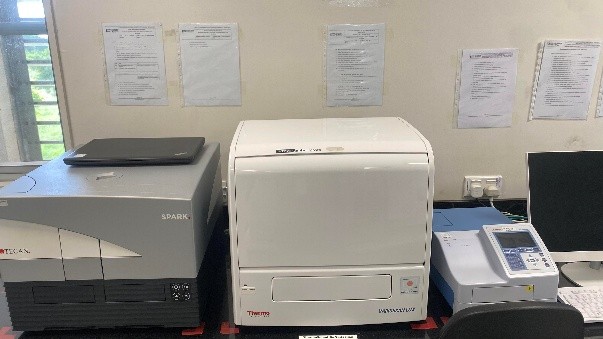
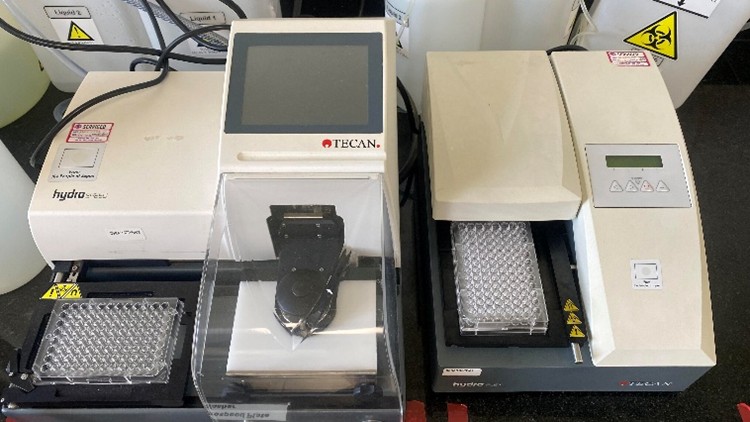
2. Automatic plate washer systems: Tecan Hydrospeed Plate Washer and Tecan hydroflex Plate Washer
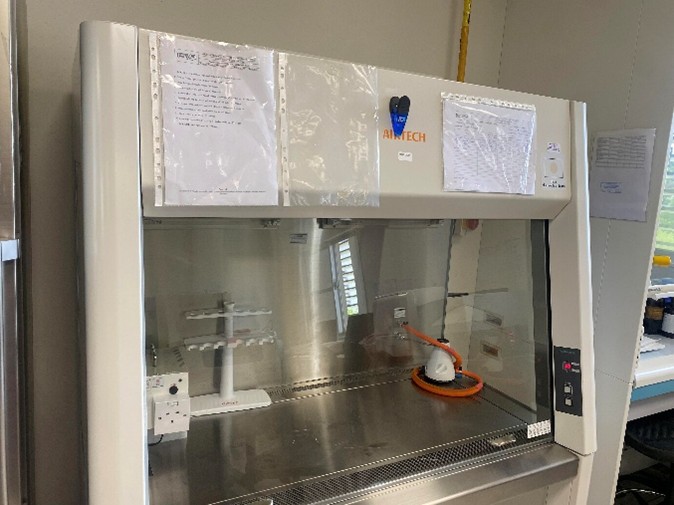
3. Biosafety cabinets: Airtech Laminar Flow
- PBMC Isolation, Enzyme-linked Immunospot Assay (ELISPOT) and FlouroSpot Assay
We have developed and established significant capacity for PBMC isolation and ELISPOT/FlouroSpot methodologies specific to clinical immunology testing requirements in accordance with GCLP standards and carry out the assays within a dedicated BSL-2 space. Since January 2025, our ELISPOT processes have been assessed in an inter-laboratory comparison (ILC) programme which runs monthly, and we have had a 100% pass rate for these monthly ILCs, which is coordinated by the Human Immunology laboratory of the International AIDS Vaccine Initiative (IAVI).
Key Equipment
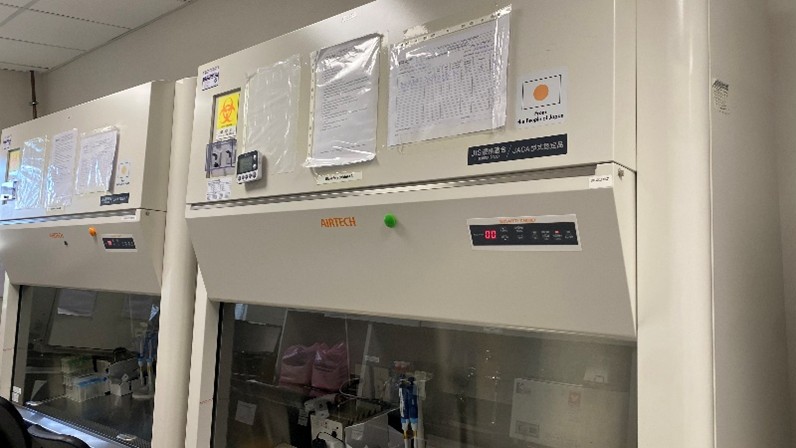
- Safety cabinet: Two (2) Airtech BSL2 cabinets.
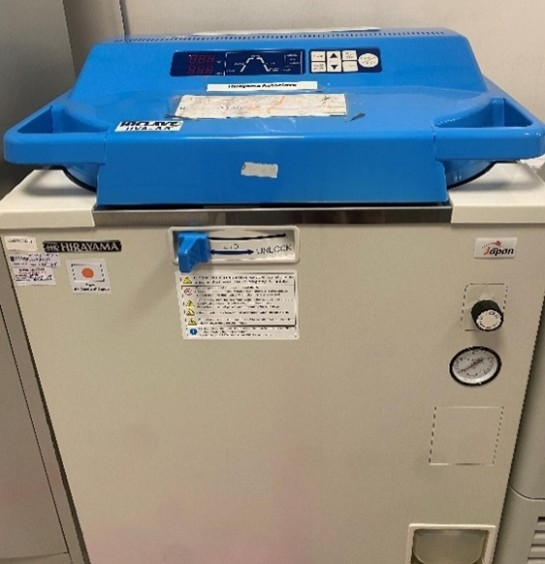
2. Sterilization unit: One (1) in-lab HICLAVE HVA-85 autoclave unit and 1-out-lab HICLAVE HVA-85 autoclave unit.
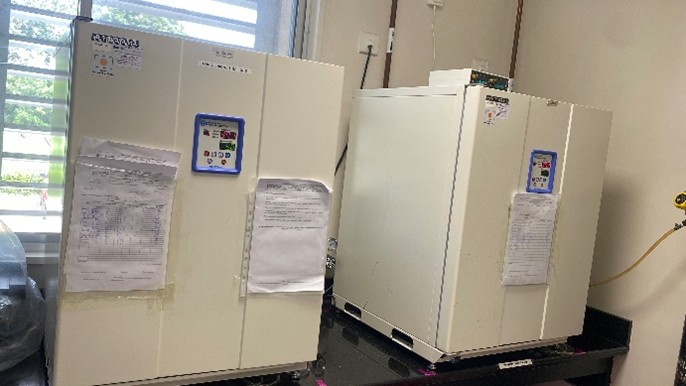
3. CO2 Incubator Units: Two (2) HIRAMAY FCI series CO2 Incubators
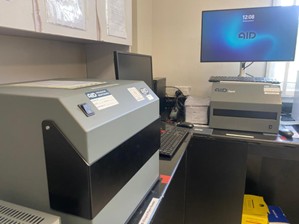
4. Plate Readers: AID iSpot and AID Multispot readers.
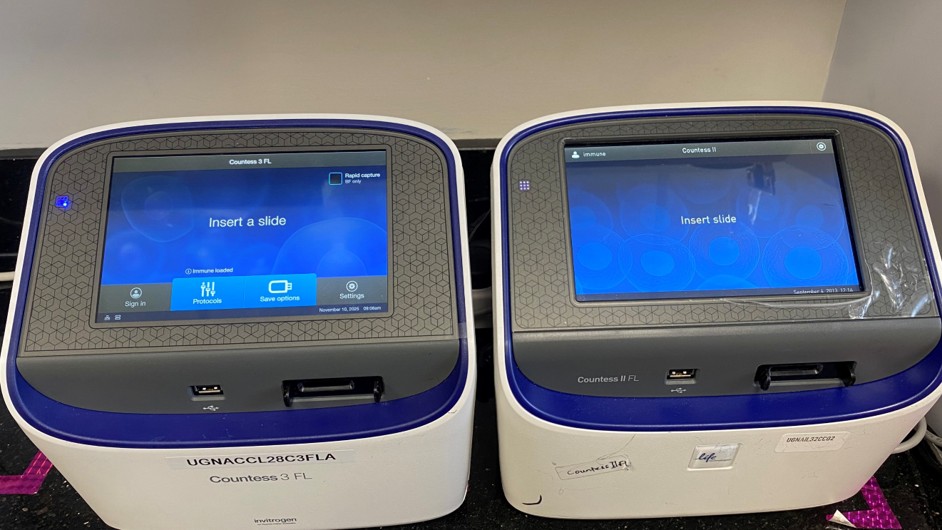
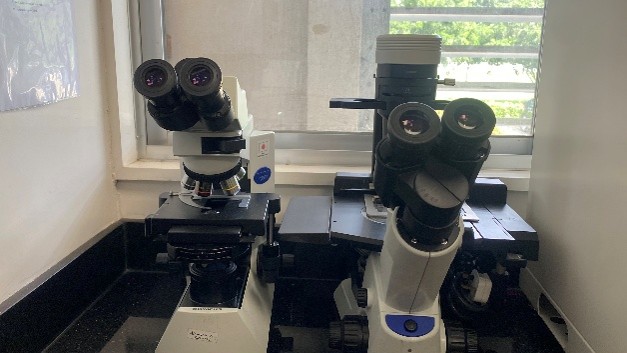
Cell Counting Units: Two (2) Automated Thermo Scienfic cell counters (Countess 3 FL & Countess II FL). Two (2) inverted microscopes (OLYMPUS CKX53 & OLYMPUS CX41)
- Flow Cytometry
The Department runs a flow cytometry core facility that is available for the analysis of clinical trial samples. The facility participates in an EQA programme offered by UK NEQAS and has also developed and qualified an in-house QC system to assure the quality of results that are put out. Details of the flow cytometry core facility and the key equipment available can be found at the following link xxxxxxxxxxxxxxxxxxxxx
- Multiplex analyte Analysis
We develop and apply multiplex technologies for the measurement of analytes including antibodies and cytokines in various clinical samples, and these technologies are available to support testing of clinical trials samples.
Key Equipment
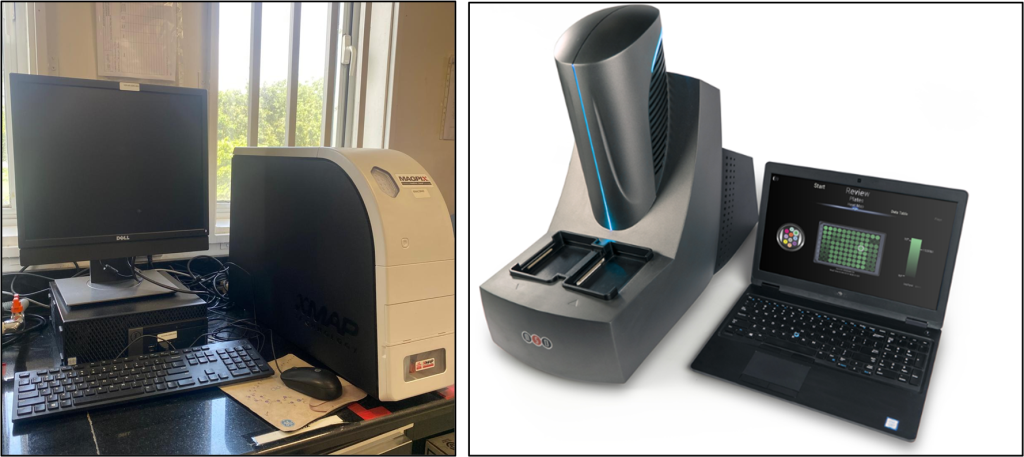
1. Multiplex Cytokine Assay: MESO QuickPlex SQ 120MM and MAGPIX Luminex systems
Additional Facilities
Sample Storage Units
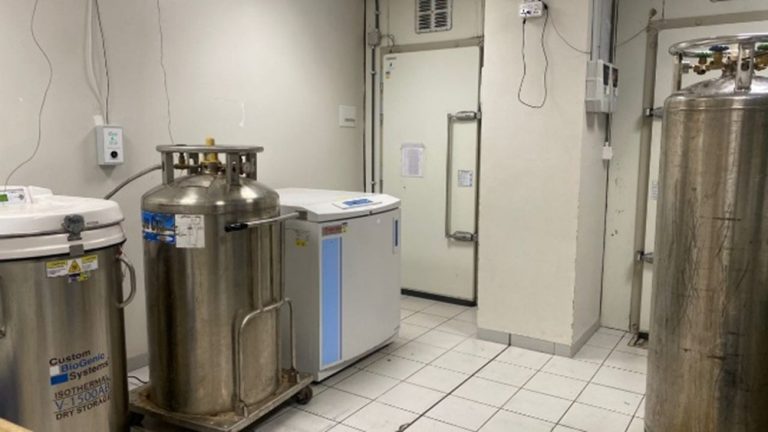
- Two (2) automated liquid nitrogen (LN2) storage systems with a combined capacity of approximately 35,000 vials. There is an additional 10,000-12,000 manual storage capacity. All these systems have automated temperature tracking devices installed for monitoring and recording temperatures consistently. All LN2 storage systems as well as the space in which they are located are access controlled, with only a limited number of trial personnel having access to these systems.
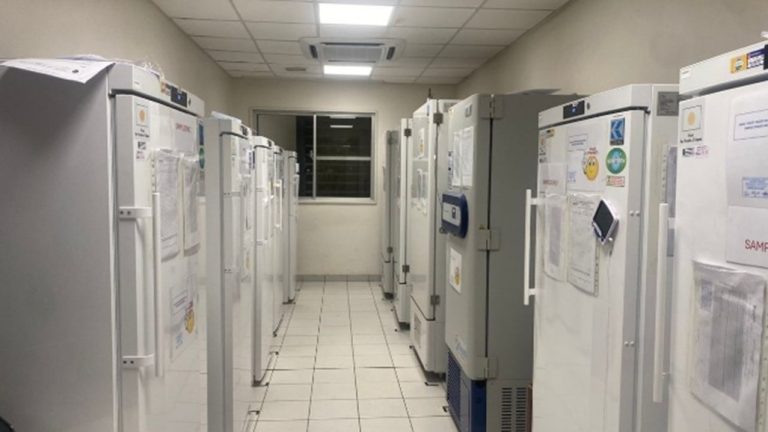
- Seven (7) -80⁰C freezers and fifteen (15) -20/-30 ⁰C freezers, all with automated temperature tracking devices installed for monitoring and recording temperatures consistently. There are dedicated freezers for sample storage and freezers for reagent storage, and all freezers as well as the room in which they are located are access controlled.
Data Management and Security Systems
- The institutional computing unit maintains servers to ensure secured data transfer and backup systems in accordance with applicable standards and regulations.
- The laboratory also uses an Organized Laboratory Information Management System (Labguru) for data management and sample inventorying. The system generates barcoded information that can be printed on labels for sample storage vials and can be used to identify specific aliquots of any sample. The Labguru system is access controlled, has full traceability for all activities undertaken by any user within the system and has been qualified for the management of clinical trial samples and data.
Clinical Trial Journey
- Successfully completed clinical trials in the last five years
- INOVIO phase 1B clinical trial for its DNA vaccine candidate: INO-4500, against Lassa fever in West Africa
- CROWN CORONATION Trial of measles/COVID-19 vaccines (Phase III)
- Ongoing trial(s)
- Phase 2 randomized, double-blinded, placebo-controlled clinical trial to evaluate the safety, tolerability, and immunogenicity of a Lassa virus glycoprotein-based vaccine in adults and children residing in West Africa.
Publications emanating from clinical immunology works (both research and clinical trials) conducted by the lab over the last five years
- Koram KA, Walker KA, Orizu B, Marrero I, Boyer J, Yang S, et al. Safety, tolerability, and immunogenicity of INO-4500, a synthetic DNA-based vaccine against Lassa virus, in a phase 1b clinical trial in healthy Ghanaian adults. Front Immunol. 2025;16. https://doi.org/10.3389/fimmu.2025.1658549.
- Osei F, Tudzi KK, Othol IO, Segbefia SP, Prah DA, Armah-Vedjesu EN, et al. Longitudinal evaluation of T-cell responses to Pfizer-BioNTech and Janssen SARS-CoV-2 vaccines as boosters in Ghanaian adults. Front Immunol. 2025;16:1643083. https://doi.org/10.3389/fimmu.2025.1643083.
- Delany-Moretlwe S, Dehbi H-M, Sikazwe I, Kyei G, Koram K, Dubberke E, et al. No evidence of MMR induced trained immunity to prevent SARS COV2: results from a multi-centre RCT. Front Immunol. 2025;16. https://doi.org/10.3389/fimmu.2025.1588190.
- Kusi KA, Ofori EA, Akyea-Mensah K, Kyei-Baafour E, Frimpong A, Ennuson NA, et al. Towards large-scale identification of HLA-restricted T cell epitopes from four vaccine candidate antigens in a malaria endemic community in Ghana. Vaccine. 2022;40:757–64. https://doi.org/10.1016/j.vaccine.2021.12.042.
- Ofori EA, Tetteh JKA, Frimpong A, Ganeshan H, Belmonte M, Peters B, et al. Comparison of the impact of allelic polymorphisms in PfAMA1 on the induction of T Cell responses in high and low malaria endemic communities in Ghana. Malar J. 2021;20:367. https://doi.org/10.1186/s12936-021-03900-1.
- Nlinwe ON, Ofori EA, Akyea-Mensah K, Kyei-Baafour E, Ganeshan H, Belmonte M, et al. Comparative analysis of the ex vivo IFN-gamma responses to CD8+ T cell epitopes within allelic forms of PfAMA1 in subjects with natural exposure to malaria. PLOS ONE. 2021;16:e0257219. https://doi.org/10.1371/journal.pone.0257219.
- Kusi KA, Aggor FE, Amoah LE, Anum D, Nartey Y, Amoako-Sakyi D, et al. Identification of Plasmodium falciparum circumsporozoite protein-specific CD8+ T cell epitopes in a malaria exposed population. PLOS ONE. 2020;15:e0228177. https://doi.org/10.1371/journal.pone.0228177.
For inquiries: immunology@noguchi.ug.edu.gh