

Prof. Kwadwo Asamoah Kusi is a distinguished immunologist at the Noguchi Memorial Institute for Medical Research’s Department of Immunology at the University of Ghana. His research focuses on immune responses to malaria and other infectious diseases, vaccine development, and host-pathogen interactions. He has led groundbreaking malaria vaccine studies, established immunological platforms for trials and antigen discovery, and published extensively in international journals. Prof. Kusi is recognized for advancing Africa’s role in immunology and translational medicine.
Beyond his scientific achievements, he has mentored young scientists and strengthened researcher capacity for immunology research across Africa. His work connects laboratory discoveries with public health needs, ensuring that science translates into real solutions for communities.

Prof. Kwadwo Asamoah Kusi, immunologist at the Noguchi Memorial Institute for Medical Research, University of Ghana.
We met Prof. Kusi in an exclusive interview during which he shared his experiences as a seasoned researchers and the impact of his work.
Priscilla Kissi: Prof. Kusi, what made you interested in immunology?
Prof. Kusi: Growing up, I often wondered why two people in the same environment could respond differently to disease. For example, one might fall sick from mosquito bites while the other remains fine. Those questions stayed with me. My path into science was almost accidental; I hadn’t even filled my forms when I arrived at secondary school, but when asked what course I wanted to pursue, the only word that came to mind was “science.” That decision shaped my life, and I’ve never regretted it. Science allows me to express myself and explore those mysteries.
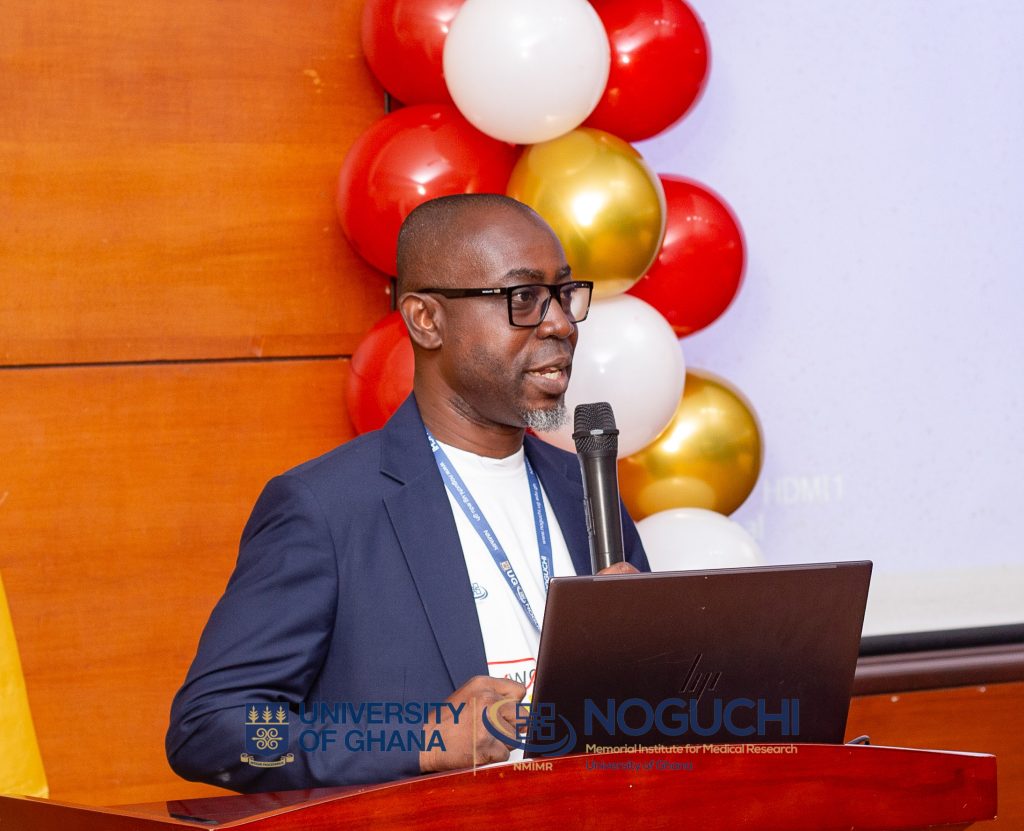
Prof. Kusi sharing his journey in immunology and vaccine development.
Priscilla Kissi: Was there a defining moment that led you into vaccine development?
Prof. Kusi: Yes. After my master’s education at the Noguchi Memorial Institute for Medical Research, I contributed to a clinical trial project in Navrongo. Later, when I pursued my PhD, I negotiated to use that platform for my research. Although circumstances changed, I found myself in an environment where vaccine research was central. That experience, combined the vision of leaders in the field, drew me deeply into vaccine development
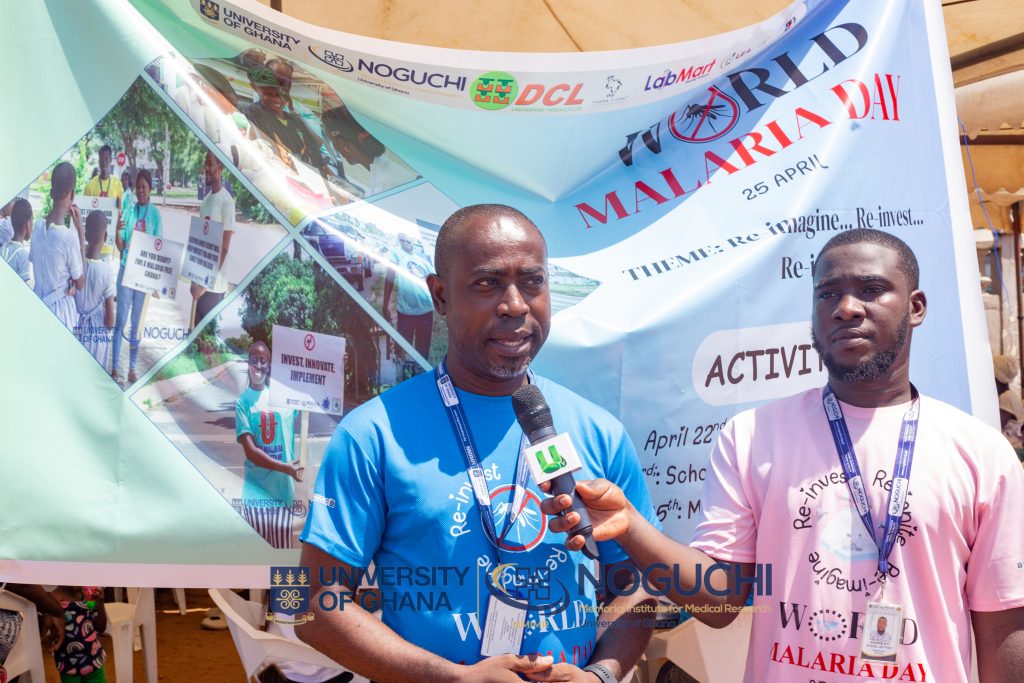
Prof. Kusi speaking with the media during 2025 World Malaria Day outreach at Jamestown, Accra.
Priscilla Kissi: How has working in Ghana’s scientific community influenced your career?
Prof. Kusi: It has been both challenging and rewarding. Funding is scarce, and local industries rarely support research. For years, I had to compete globally for resources. But when I returned to Ghana in 2012, I benefited from a new postdoctoral program that provided grants to start my own projects.That opportunity, along with international collaborations, helped me build a foundation for sustained research. Programs like these are vital for reintegrating scientists into Africa’s research environment.
Priscilla Kissi: Professor Kusi, could you provide a simplified explanation of immunology
for a general audience?
Prof. Kusi: Immunology is the study of the immune system the body’s defence against
anything foreign. It’s the system that protects us from infections, and understanding it is key
to developing vaccines and treatments.
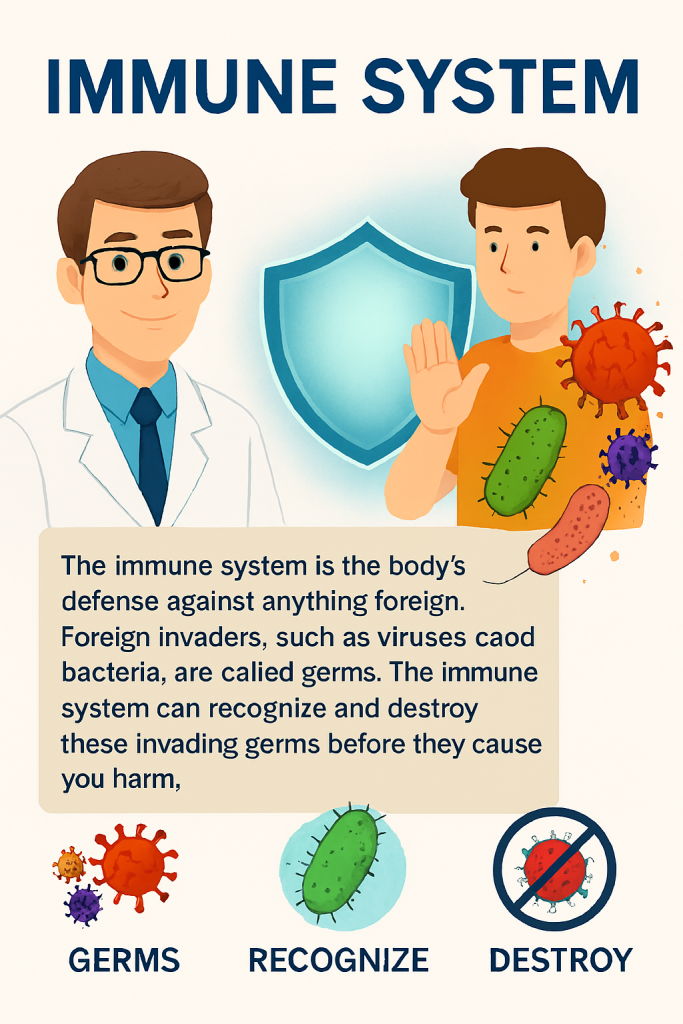
Your Body’s Shield, How the Immune System Protects You from Harmful Germs.
Priscilla Kissi: What breakthroughs in your research have had the greatest impact?
Prof. Kusi: Securing major grants was transformative. In 2018, I collaborated with a U.S. Navy
researcher and received funding of over $1.5 million, with $530,000 dedicated to my work.
That was the first time I managed resources of that scale. Another grant followed in 2019,
sustaining my research for years. These opportunities allowed me to expand projects, including
community-based hepatitis screening and vaccination campaigns that have reached thousands.
Priscilla Kissi: How does your research affect the daily lives of families in Ghana?
Prof. Kusi: While much of my work is at the discovery stage, we’ve ensured direct community
impact through hepatitis screening and vaccination. Since 2021, we’ve tested and vaccinated
nearly 2,000 people, often free of charge. We also engage schools through health education
programs, empowering young people with knowledge about diseases and prevention.
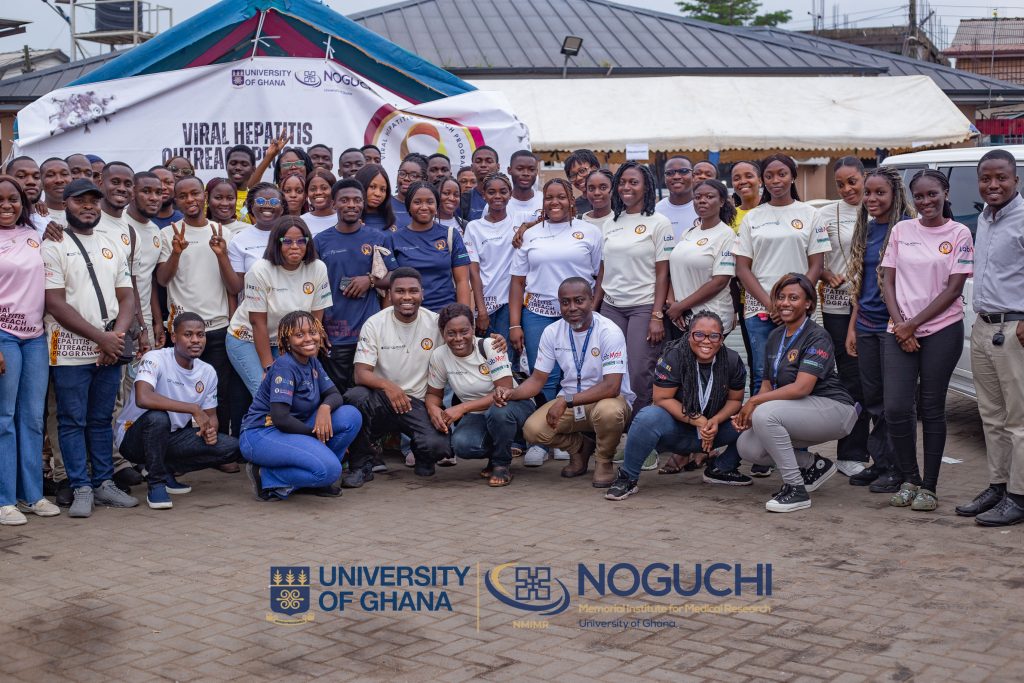
Group photo of NMIMR Viral Hepatitis Outreach Program
(VHOP) team at a Hepatitis B community outreach event.
Priscilla Kissi: Vaccines sometimes raise concerns about side effects. What has your research taught you about this? Prof. Kusi: Everything in life has side effects, even water, if taken in excess. Vaccines are no different, but their benefits far outweigh the risks. Side effects like mild headaches or fever usually pass quickly, while the protection vaccines provide can last a lifetime. For example, hepatitis can become a chronic condition if left untreated, so vaccination is a powerful safeguard.
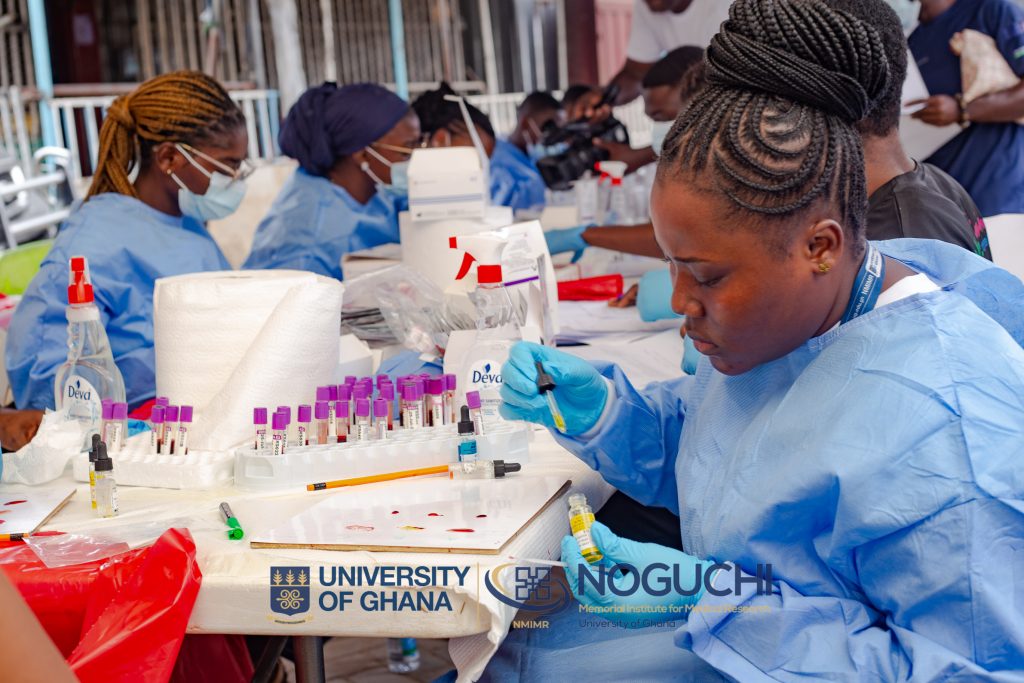
Empowering Ghanaian communities through free hepatitis screening,
vaccination, and youth health education
Priscilla Kissi: What role will immunology play in preparing Africa for future pandemics?
Prof. Kusi: Immunology is central. Africa faces a high burden of infectious diseases, and
understanding host-pathogen interactions is critical for solutions. Pandemics will continue to
emerge; history shows us that. The challenge now is speed. Can we go from identifying a new pathogen to developing a vaccine within 100 days? Immunology is at the heart of that race.
Priscilla Kissi: You’ve mentored many young scientists. What advice would you give
Africans who want to study immunology?
Prof. Kusi: Immunology is a golden field. It’s challenging, full of complex terms and
expensive materials, but it’s deeply rewarding. Pandemics will keep coming, and
immunologists will always be needed. I encourage young scientists to join networks,
collaborate, and build capacity. The future depends on having a strong community ready.
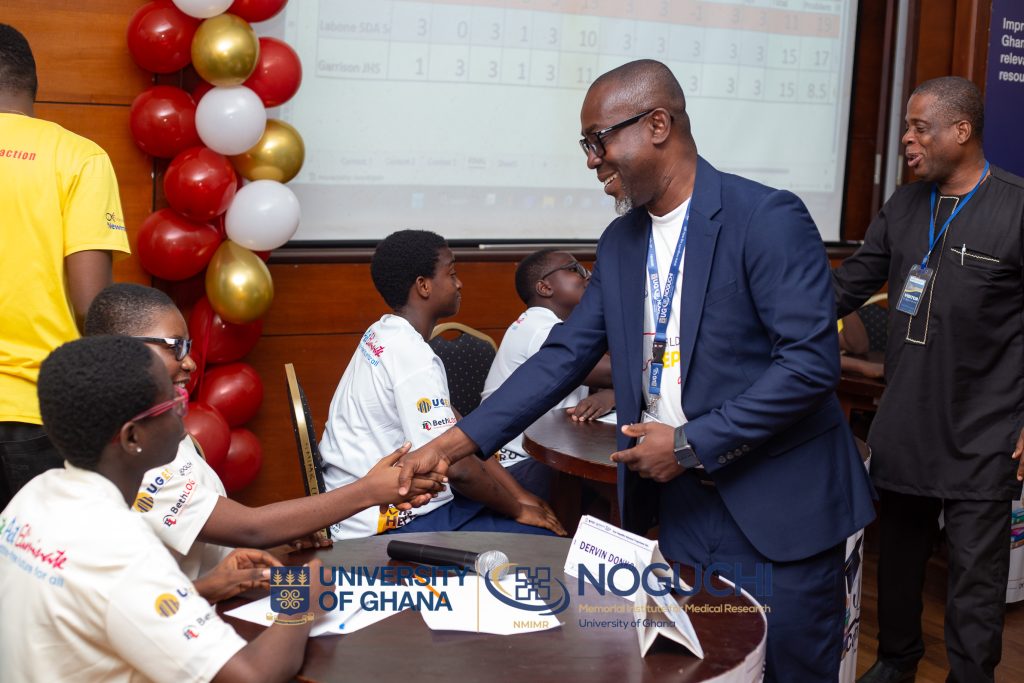
Empowering young immunology scientists through
educational quizzes
Priscilla Kissi: What areas of immunology deserve more attention?
Prof. Kusi: Innate immunity. It’s the first line of defence we’re born with, yet most research
focuses on adaptive immunity, the system we acquire through experience and vaccines.
Innate immunity is underexplored but crucial for understanding how infections begin and
how the body responds immediately.
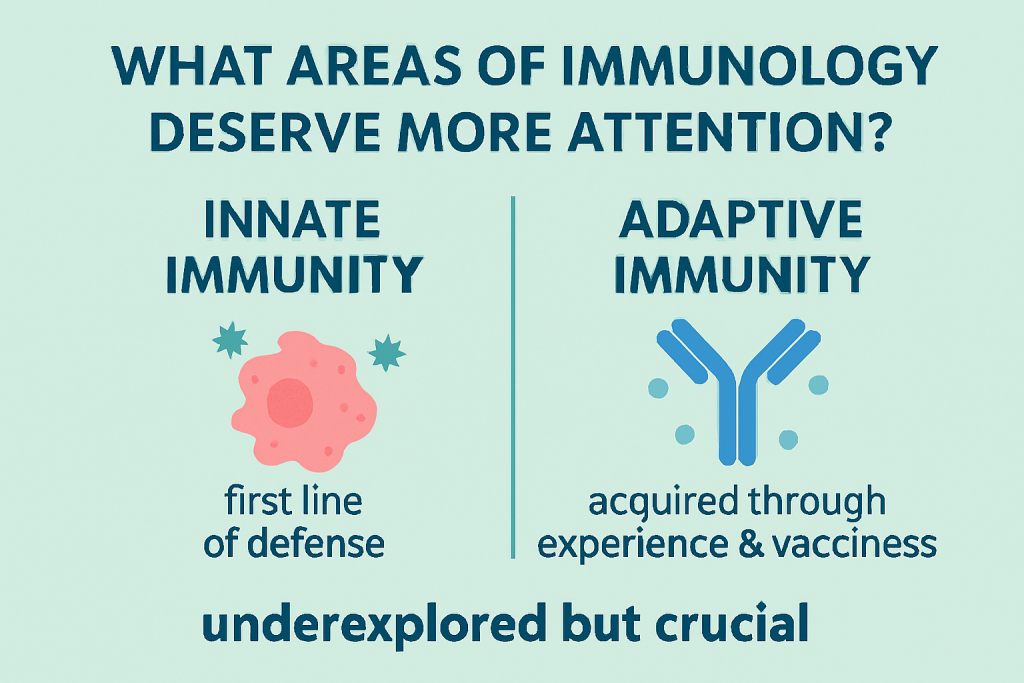
Innate immunity is our body’s first defence and deserves more attention in research.
Priscilla Kissi: How do you see collaborations between African and global institutions
evolving?
Prof. Kusi: In the past, Africa often provided samples while analysis was done abroad. That’s
changing. Today, we conduct much science ourselves, from trials to diagnostics. Building local capacity and funding mechanisms will ensure Africa has a stronger voice in global health. During COVID-19, we saw the importance of self-reliance, and I believe the next decade will bring even more balance in partnerships.
Priscilla Kissi: On a personal level, what keeps you motivated in this tough field?
Prof. Kusi: Research allows me to innovate and create new solutions. Unlike medicine,
where procedures are fixed, science gives me the freedom to think outside the box. For
example, when a commercial supplier shut down, we developed our own components for a
clinical trial that creativity keeps me inspired everyday
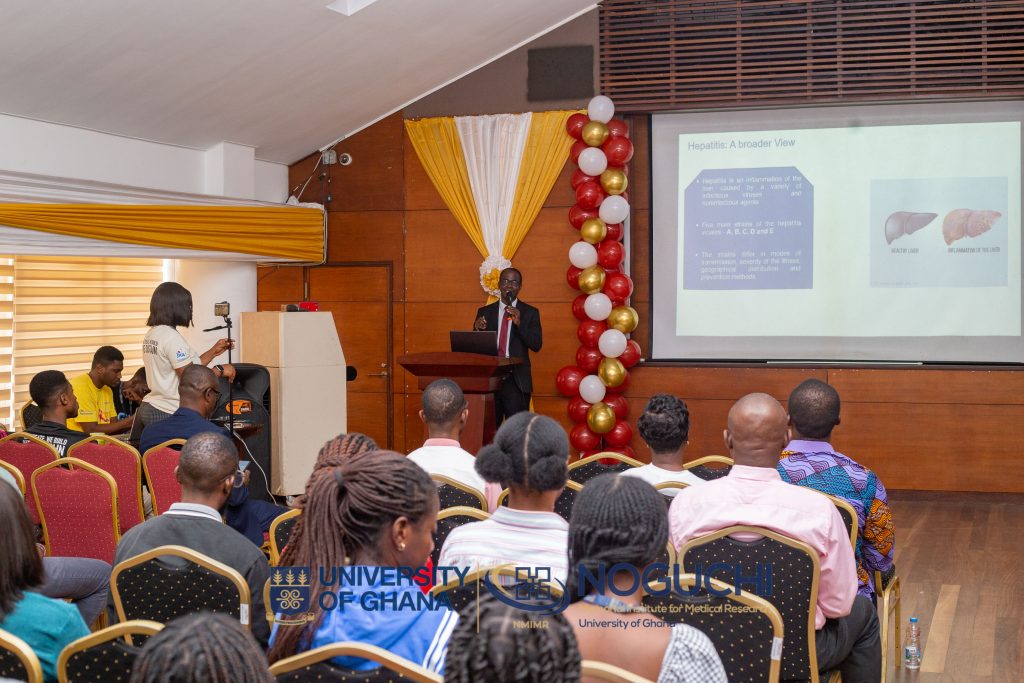
A collaborator delivering a lecture on hepatitis from a
broader perspective, highlighting how research drives innovation and solutions.
Priscilla Kissi: Looking back, what achievement are you most proud of?
Prof. Kusi: Building Ghana’s capacity for vaccine-related research. Over the past 12 years,
we’ve developed infrastructure and expertise that make us a leader in immunology. While we
don’t yet produce vaccines locally, we have the foundation to do so. That progress is something I’m deeply proud of.
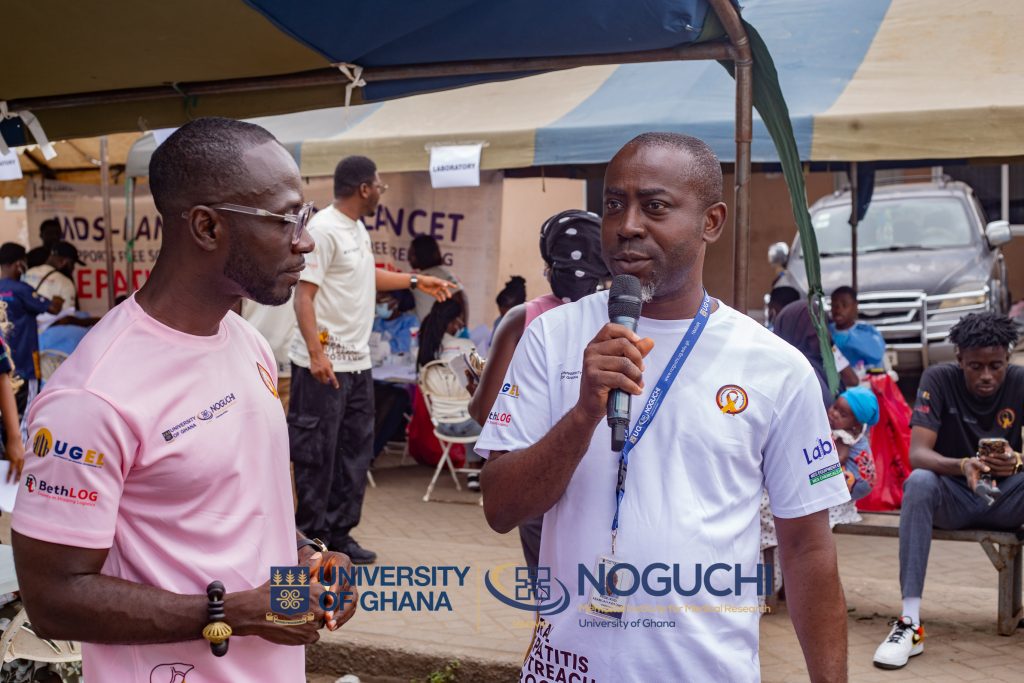
Prof. Kusi proudly advancing Ghana’s vaccine research capacity with O.K foundation.
Priscilla Kissi: Prof. Kwadwo Asamoah Kusi, thank you for sharing your journey and
insights. Your work in immunology is inspiring and vital for advancing healthcare solutions
in Ghana and strengthening Africa’s role in global health research.
Prof. Kusi: You’re welcome.