

Prof. Linda Eva Amoah is a Ghanaian immunologist whose pioneering work focuses on malaria transmission biology, transmission-blocking immunity, protein production, and diagnostics. At NMIMR, she has dedicated her career to advancing scientific understanding of malaria and developing tools that support control and prevention across Africa.
Prof. Amoah’s research connects laboratory discoveries with real solutions for public health. She is dedicated to mentoring young scientists and engaging communities in malaria awareness and prevention. Her journey from childhood curiosity to leadership in global health shows perseverance, innovation, and a passion for science that continues to shape the fight against malaria.
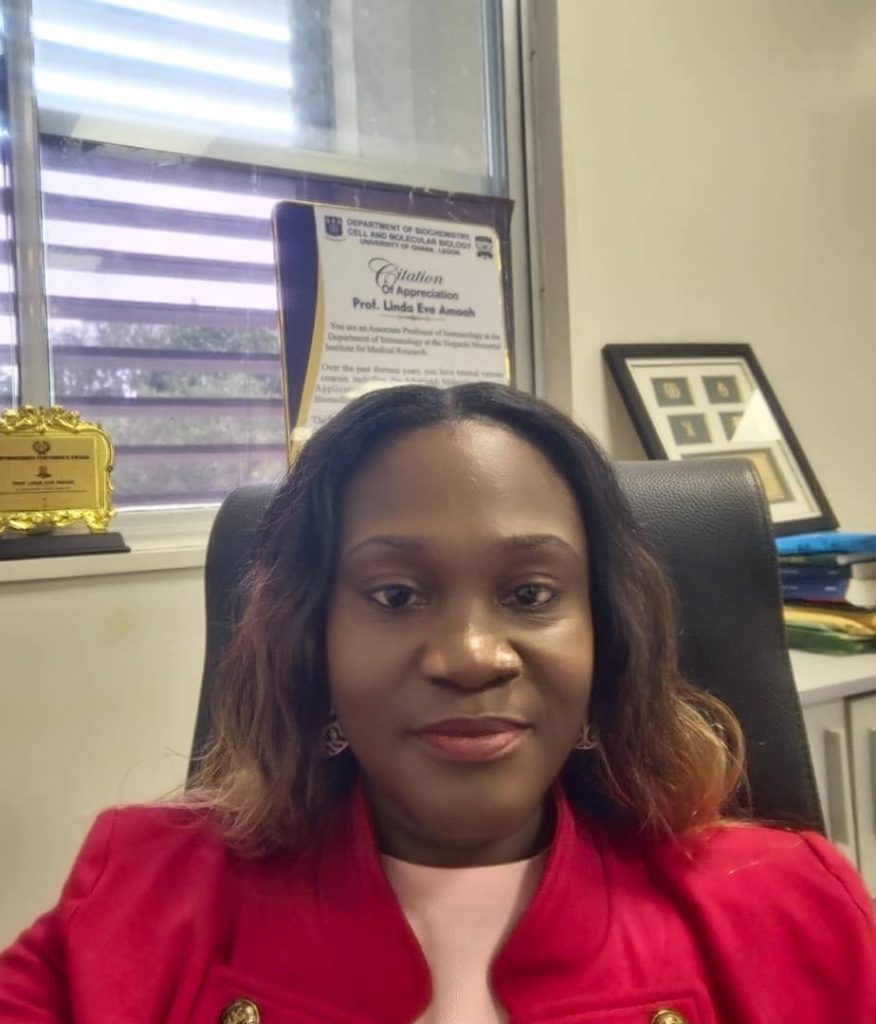
Prof. Linda Eva Amoah, Associate Professor of Immunology & Senior Research Fellow at the Noguchi Memorial Institute for Medical Research (NMIMR), University of Ghana
In this interview, Prof Amoah shares her story, the breakthroughs that excite her, and the challenges that remain in the fight against malaria.
Priscilla Kissi: What inspired you to choose science as a career and immunology as your research domain?
Prof. Amoah: I have always been fascinated by science. As a child, I knew I would become a doctor or scientist. Malaria became my focus because, growing up, I saw how big a problem it was in Ghana. At the time, few institutions were studying it, and I felt I should be one of those working toward a cure.
Priscilla Kissi: For those reading who may not know, how would you explain immunology in everyday language?
Prof. Amoah: Immunology is simply the study of the immune system, how it helps us fight infections. When someone gets malaria, their body makes special fighters called antibodies. These antibodies stay in the body and remember the malaria parasite. So, if the person is infected again, the antibodies quickly recognize the parasite and help the body fight it off faster. In short, the immune system learns from experience and uses that knowledge to clear infections.
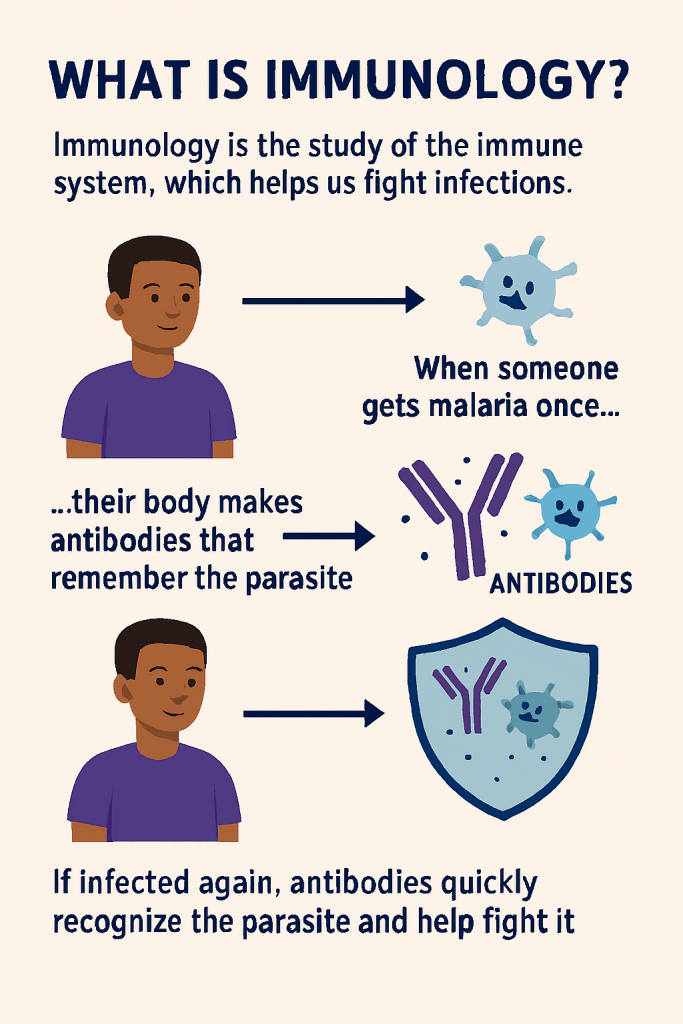
An image illustrating how the immune system learns to fight malaria.
Priscilla Kissi: Looking back, how malaria research has evolved especially in terms of diagnosis and support for affected individuals?
Prof. Amoah: Things have changed a lot. In the past, we did not have quick tests to check for malaria. Now we have amazingly fast tests that can give results in just a few minutes. These new tests are extremely accurate, as good as the advanced laboratory method called PCR, which scientists use to detect tiny amounts of parasites. This is a big step forward because it means people can be diagnosed and treated much more quickly
Priscilla Kissi: What scientific and practical challenges make the development of a malaria vaccine such a slow and complex process?
Prof. Amoah: There are many challenges. The malaria parasite, Plasmodium falciparum, is complicated and comes in many forms. This makes it hard for scientists to find one clear target to use as a universal vaccine. On top of that, funding for malaria research is limited, which makes progress slow.
Priscilla Kissi: What breakthroughs in malaria diagnosis excite you the most right now?
Prof. Amoah: The ultra-sensitive‑ rapid diagnostic tests. These are quick tests that can give results in minutes, and what makes them remarkable is that they are as accurate as the advanced laboratory tools we use, like PCR. In simple terms, it means people can now be tested for malaria faster and more reliably, even outside big hospitals, which is a huge breakthrough.
Priscilla Kissi: Leading a team comes with challenges. What challenges do you encounter in leading and supporting your research team?
Prof. Amoah: My biggest challenge is securing enough funding for research. It is also my responsibility to make sure the salaries of all my lab members are paid and that the team has the resources they need to work. In simple terms, leading a team means I am always working to secure funding so the people I work with can continue doing their jobs.
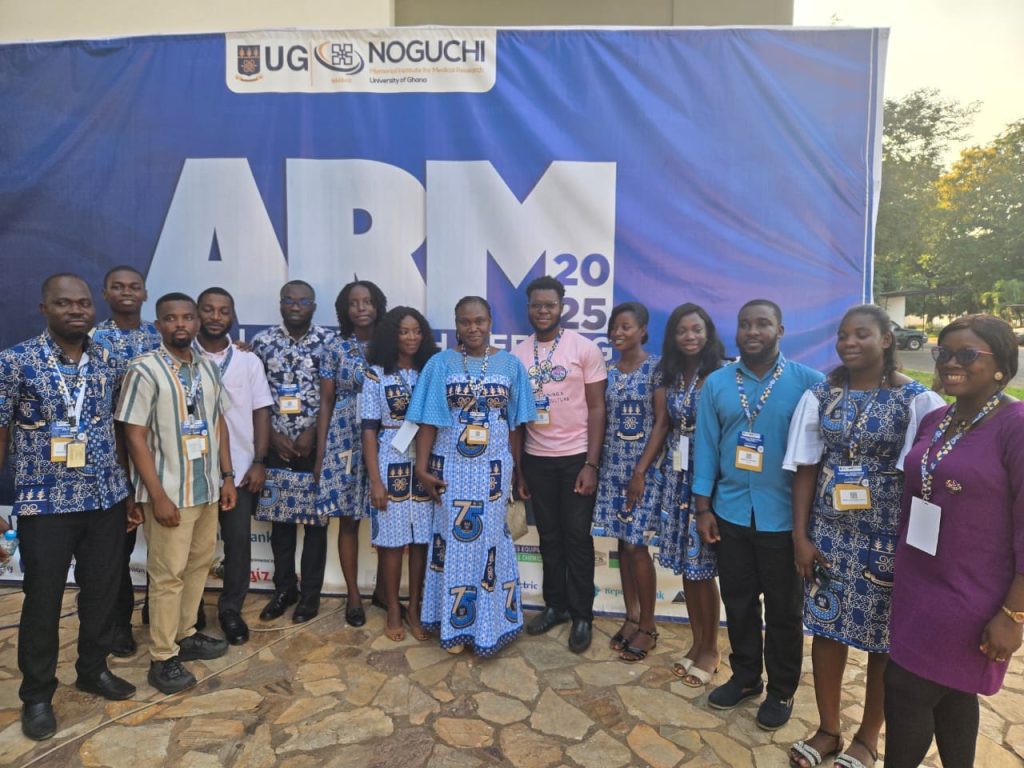
A photo of Prof. Amoah and her team
Priscilla Kissi: How has your research on malaria diagnostics and treatment contributed to improving case management and public health in Ghana?
Prof. Amoah: We conduct surveillance for different Plasmodium species since treatment for different malaria parasites vary. We also identify parasites with HRP2 gene deletions, which evade conventional rapid diagnostic kits control programs to adapt. Our lab is one of the leading labs conducting antimalarial drug screening activities, one of the most advanced in Ghana. These efforts directly improve case management and public health.
Priscilla Kissi: How do you engage communities to strengthen malaria prevention and ensure proper diagnosis and treatment?
Prof. Amoah: Outreach is key. We spend time teaching residents of numerous communities how to clear mosquito breeding sites because they spread malaria. We encourage people to sleep under bed nets to protect themselves at night. We also explain that not every fever is caused by malaria, so it is important to get tested before taking malaria medicine. In short, we educate people on how to prevent mosquito breeding, use protection, and confirm malaria with a test before treatment.
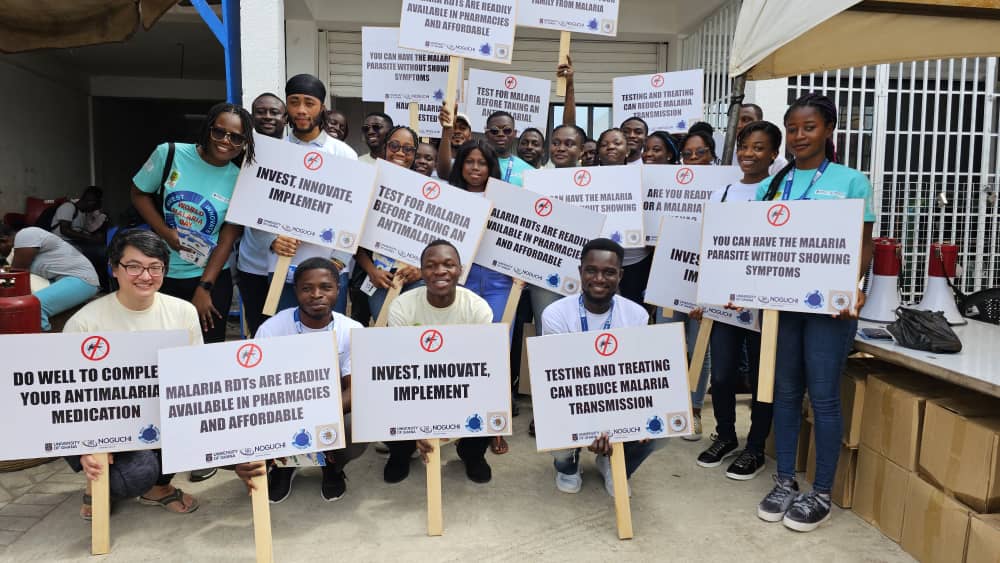
Malaria Team empowering communities with education, mosquito control, and rapid testing on World Malaria Day 2025.
Priscilla Kissi: Which areas of malaria research require greater focus to address current challenges and move closer to elimination?
Prof. Amoah: Two critical areas demand greater attention: drug discovery, as resistance to existing antimalarials continues to rise, and transmission blocking‑ strategies, since preventing the spread of malaria is just as important as treating the disease itself. By halting transmission, we move significantly closer to achieving elimination.
Priscilla Kissi: How can African scientists collaborate more effectively to speed up malaria elimination?
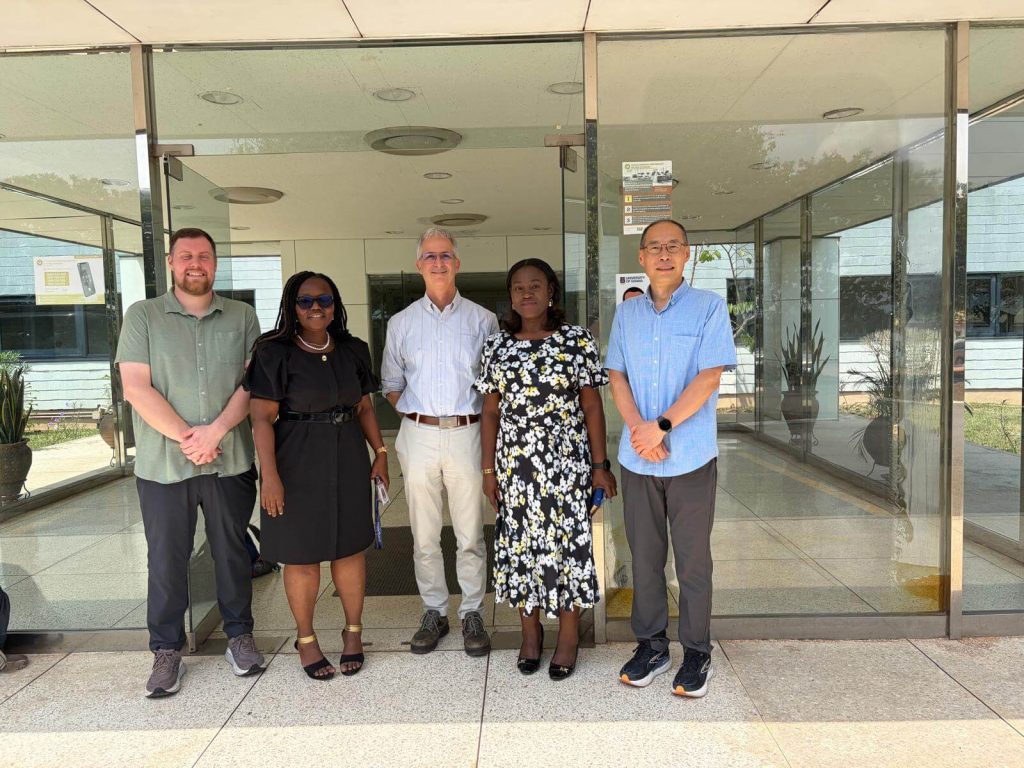
Researchers and collaborators at the Ghana Drug Discovery Hub workshop, emphasizing Prof. Amoah’s call for stronger focus on antimalarial drug discovery
Priscilla Kissi: How can African scientists collaborate more effectively to speed up malaria elimination?
Prof. Amoah: Working together is very important in the fight against malaria. No single country can get rid of malaria on its own because mosquitoes and people travel across borders and carry the parasites with them. This means that even if one country makes progress, malaria can come back from a neighboring country. To truly eliminate malaria, scientists, health workers, and governments must join forces, share knowledge, and coordinate their efforts across regions. Only through collaboration can we stop the spread and move closer to a malaria-free‑ world.
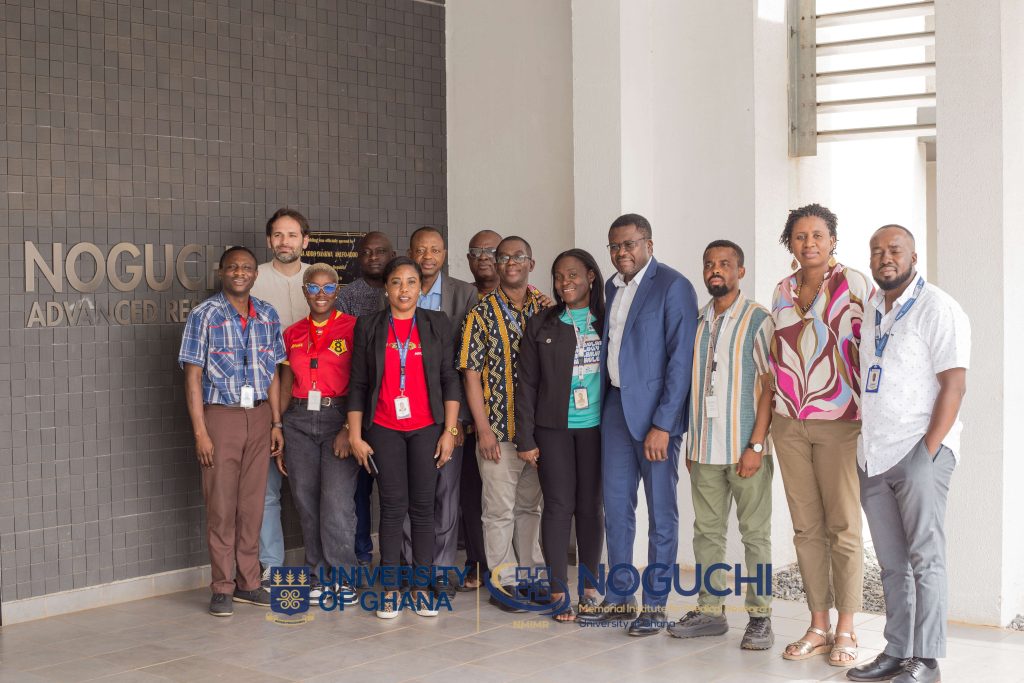
Some members of the PfVIMT transmission blocking consortium
Priscilla Kissi: Finally, what advice would you give to young students who want to study science and immunology?
Prof. Amoah: Passion is everything. If you are passionate, you will give more than your best. Follow your curiosity, if I could do it, everyone can.
Priscilla Kissi: Science demands passion, curiosity, and persistence. Thank you, Professor, for sharing your experiences and for your commitment to advancing research and inspiring the next generation.
Prof. Amoah: Thank you. It has been a pleasure to share my journey.