
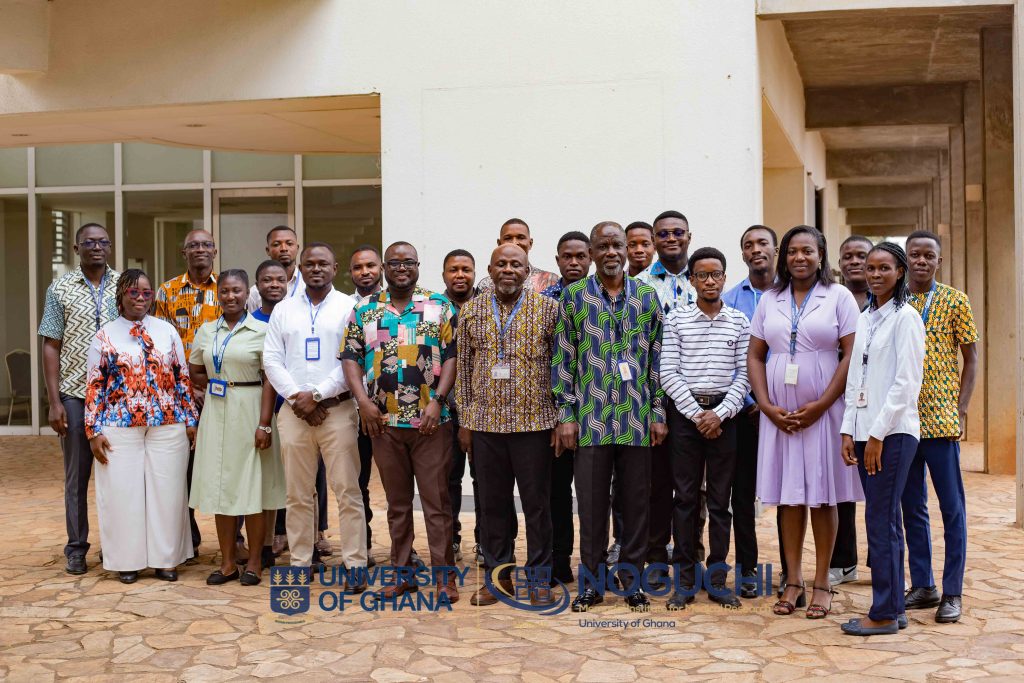
Driven by a commitment to ethical biomedical research, Dr. Samuel Adjei’s work focuses on laboratory animal science, preclinical drug development, and translational research. As Head of the Department of Animal Experimentation at NMIMR, he uses animal models to evaluate the safety and effectiveness of vaccines, natural products, and potential treatments.
Dr. Adjei’s work supports the strengthening of preclinical research capacity in Ghana, ensuring that scientific rigour, animal welfare, and ethical oversight remain central to the development of safer health interventions.

Dr. Samuel Adjei, Senior Research Fellow and Head of the Department of Animal Experimentation, Noguchi Memorial Institute for Medical Research (NMIMR), University of Ghana.
We had the opportunity to speak with Dr. Samuel Adjei about his work in laboratory animal science, including the development of animal models and the preclinical evaluation of medicinal plants for drug discovery.
Priscilla Kissi: To begin, could you introduce yourself and tell us your role at the Noguchi Memorial Institute for Medical Research?
Dr. Adjei: I am Dr. Samuel Adjei, a Senior Research Fellow and Head of the Department of Animal Experimentation at NMIMR. My work focuses on laboratory animal science, translational research, preclinical drug development, and evaluating the safety and effectiveness of natural products and vaccines. Since joining NMIMR in 1995, I have received advanced training in Japan and the United States. Today, I lead a department that supports biomedical research through animal-model development, breeding and care, preclinical testing, and ethical oversight. My role brings together science, animal welfare, research quality, and capacity building.
Priscilla Kissi: What first sparked your interest in science, and how did that shape your academic and professional path?
Dr. Adjei: My interest in science dates to my secondary school years, when I had my first experience dissecting an albino rat during biology practical lessons. That experience sparked my curiosity about science, disease, and human health, leading me into biomedical research and laboratory animal science. I became interested in how ethical, well-designed animal studies help researchers understand diseases and develop medicines, vaccines, and medical technologies. What continues to inspire me is the chance to translate scientific discoveries into safe effective healthcare solutions. Throughout my career, I have been guided by the 3Rs—Replacement, Reduction, Refinement and the 4th R, Responsibility, which promotes ethical accountability, transparency, and a culture of care. I believe ethical science and scientific excellence must always go together.
Priscilla Kissi: You’ve built a career in a highly specialized field. What key experiences or turning points shaped your journey to becoming Head of the Animal Experimentation Department?
Dr. Adjei: Several experiences have been instrumental in shaping both my scientific career and my leadership philosophy. Early in my career, I had the privilege of participating in a wide range of preclinical studies, including the evaluation of natural products, vaccines, and novel therapeutic candidates. These experiences showed me how well-designed animal studies can help turn laboratory discoveries into safe effective health interventions. Working with scientists from different fields also taught me that meaningful discoveries depend on collaboration. Over time, I gained experience in facility management, animal welfare, biosafety, quality systems, and research support, preparing me to lead the Department of Animal Experimentation. Mentoring young scientists, building partnerships, and strengthening laboratory animal science capacity in Ghana have been especially rewarding. These experiences have shaped my belief that leadership is about helping people grow, innovate, and conduct research that benefits society.
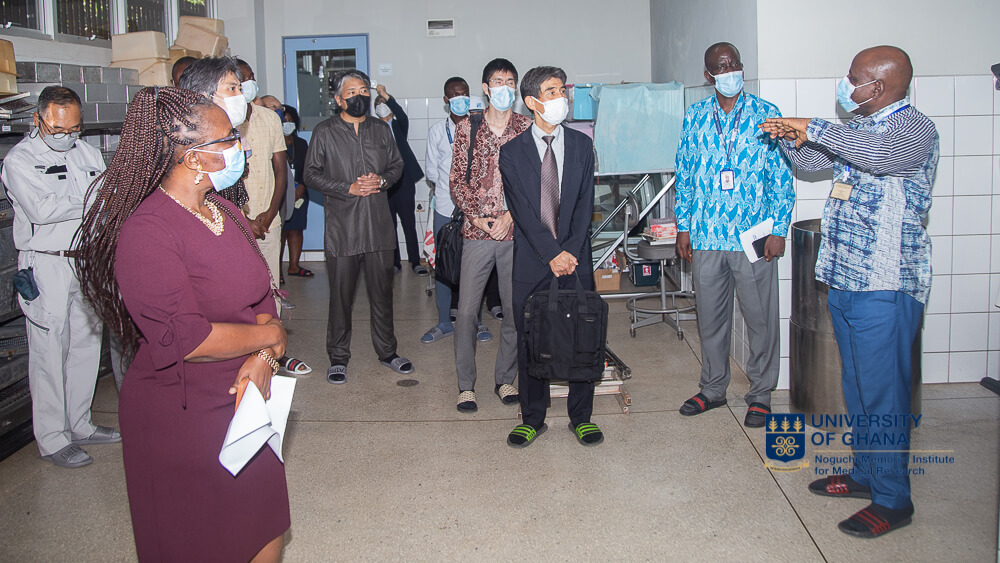
Dr. Adjei engaging collaborators during a visit to NMIMR’s Animal Experimentation Department.
Priscilla Kissi: Could you walk us through what your work in the Animal Experimentation Department involves on a day-to-day basis?
Dr. Adjei: One of the things I enjoy most about my work is that no two days are ever the same. As Head of the Department of Animal Experimentation, I wear several hats. I oversee our animal facility, including breeding, animal care, welfare, and research support, ensuring that all activities meet high ethical and quality standards. I work closely with researchers to design appropriate animal studies, review protocols, select suitable models, and ensure compliance with ethical and regulatory requirements. I also supervise veterinary, other staff and help maintain a safe environment for both animals and researchers. My research work includes development of disease models, preclinical testing of natural products and vaccines, and translating laboratory findings into health solutions. I teach and mentor students, scientists, veterinarians, and technicians. Ultimately, my role is to provide the expertise and ethical framework needed for high-quality biomedical research that improves human and animal health.
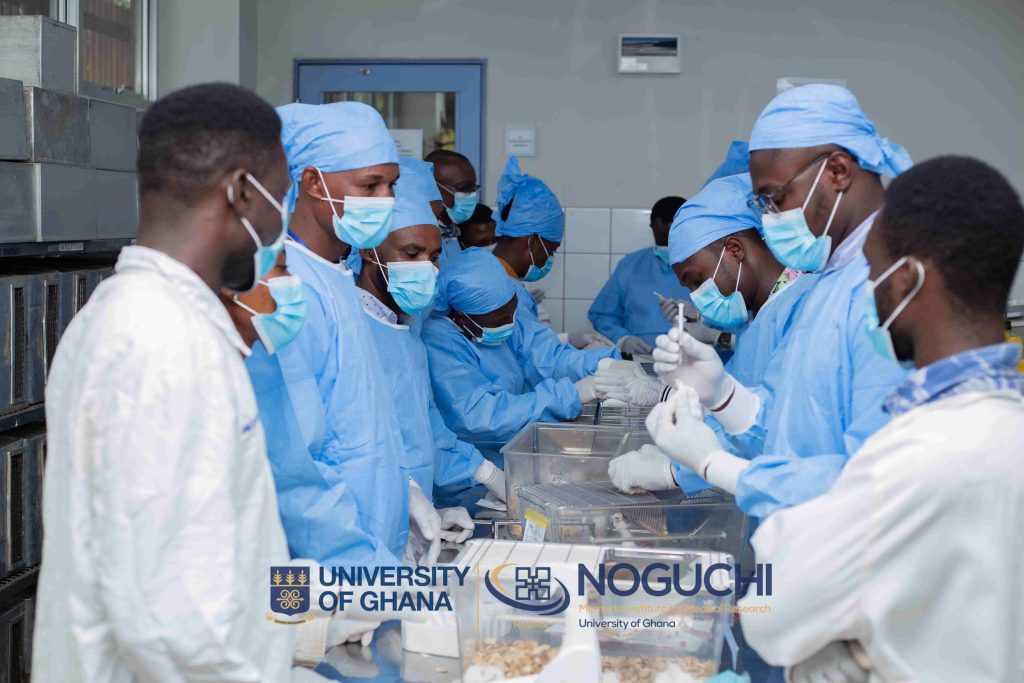
Researchers and technicians conducting animal care and research procedures in the laboratory.
Priscilla Kissi: Your research relies on the use of animal models. For those who may not be familiar with the term, what are animal models in biomedical research, and why are they so important in biomedical research?
Dr. Adjei: Animal models are carefully selected animals used to study biological processes, diseases, and potential treatments under controlled conditions. They are important because many aspects of human disease cannot be fully understood using cell cultures alone. Animal models help us understand disease mechanisms, evaluate safety, and assess whether a new medicine is likely to be effective before it is tested in humans.
Priscilla Kissi: Why is preclinical testing such an important step in the development of new drugs and medicinal products before they reach human studies?
Dr. Adjei: Preclinical testing is a critical safety checkpoint. Before a medicine reaches human volunteers, researchers need evidence that it has acceptable safety and some indication of effectiveness. Preclinical studies help identify potential toxicities, determine appropriate dose ranges, and generate the data needed for regulatory and ethical approval of clinical trials.
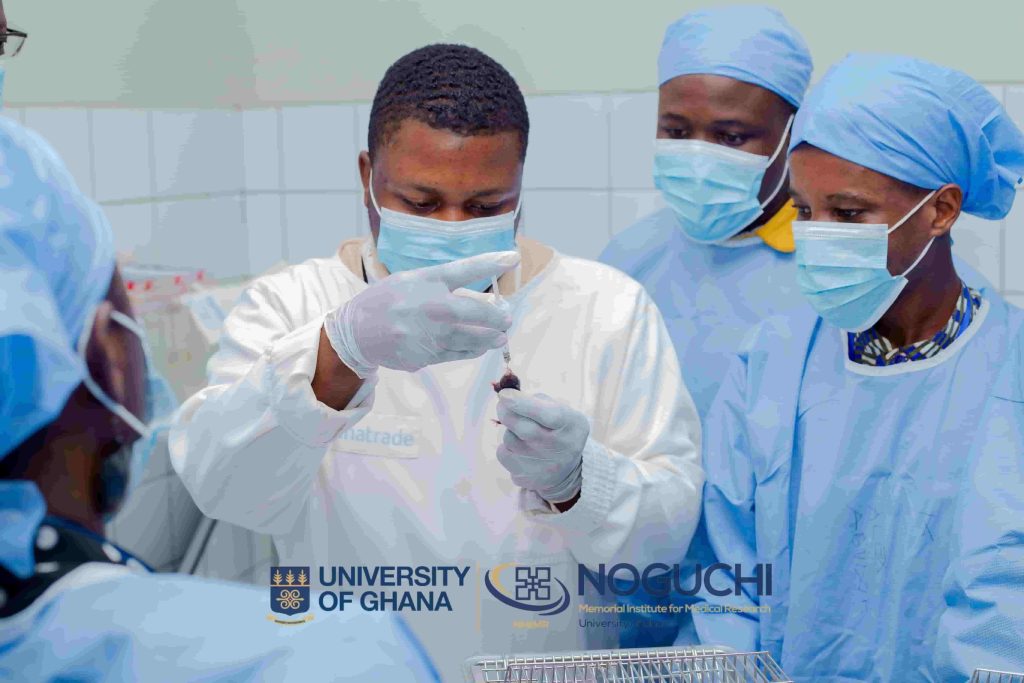
Researchers conducting preclinical testing in a rat to assess the safety and effectiveness of potential medicinal products.
Priscilla Kissi: Looking at your career so far, what would you consider some of your most significant achievements or contributions in your field?
Dr. Adjei: One achievement I value most is helping to grow the Department of Animal Experimentation into a nationally recognised platform for preclinical research and laboratory animal science. We have strengthened our infrastructure, technical capacity, and staff development to support high-quality ethical preclinical research. I am particularly proud of our work developing the grasscutter as a model for Buruli ulcer, which was recognised by the World Health Organization and improved understanding of the disease. Our department has also supported research in infectious diseases, natural-product drug discovery, vaccine development, toxicology, and translational medicine. We are also contributing to Ghana’s vaccine research and development efforts by building local capacity for preclinical evaluation and potency testing. Mentoring students and early-career scientists has been equally rewarding. We have recently published a paper on the animal facility at NMIMR (https://doi.org/10.46829/hsijournal.2026.4.8.2.1442-1455). Ultimately, my greatest achievement is helping to build systems and capacity that support drug discovery, development of safer medicines, vaccines, and health interventions in Ghana and beyond gives me the greatest sense of purpose.
Priscilla Kissi: Your department plays a vital role in supporting research across the Institute. How has this work contributed to scientific discoveries and biomedical research at Noguchi?
Dr. Adjei: The Department is a critical enabler of biomedical research at NMIMR, providing the animal models, technical expertise, and specialized facilities that support translational research across the Institute. Over the past two decades, we have supported more than 75 ethically approved research projects and contributed to over 500 peer-reviewed publications spanning infectious diseases, non-communicable diseases, natural product research, and vaccine development. By ensuring high standards of laboratory animal care, ethics and preclinical research, the Department has played a pivotal role in generating the evidence needed to advance new diagnostics, therapeutics, vaccines, and other health interventions that address Ghana’s and Africa’s priority health challenges.

Dr. Adjei with his team, supporting biomedical research and building laboratory animal science capacity.
Priscilla Kissi: How do you ensure that animal welfare and ethical standards are strictly maintained in your research and facility operations?
Dr. Adjei: At NMIMR, animal welfare is a scientific and ethical priority. Every study is independently approved by UG-IACUC and follows the 3Rs: Replacement, Reduction, and Refinement, with veterinary care, trained staff, humane procedures, and regular monitoring to ensure responsible, reliable research.
Priscilla Kissi: As a department head, what have been some of your biggest challenges, and how have you addressed them within the facility?
Dr. Adjei: One of the biggest challenges has been balancing the growing demand for high-quality laboratory animal services with limited resources, including infrastructure, equipment, and personnel. At the same time, there has been increasing emphasis on meeting international standards for animal welfare, biosafety, and research quality. We have addressed these challenges by strengthening quality management systems, expanding staff training and capacity building, improving our animal breeding and husbandry practices, and fostering collaborations to mobilize resources. We have also positioned the Department to support Ghana’s growing vaccine research and development ecosystem while pursuing strategic initiatives such as establishing a diagnostic laboratory and working towards ISO and AAALAC accreditation. These efforts have enhanced our ability to provide reliable, ethical, and high-quality preclinical research support to the Institute and its collaborators.

Dr. Adjei addressing participants on quality standards, compliance, and continuous improvement in research.
Priscilla Kissi: What developments or innovations in laboratory animal science and biomedical research are you most excited about for the future?
Dr. Adjei: Looking ahead, I envision the Department evolving into a Centre of Excellence in Laboratory Animal Science and Translational Research for Ghana and the West African sub-region. By combining world-class infrastructure, highly trained personnel, strong quality management systems, and strategic collaborations, we hope to support innovations that translate scientific discoveries into improved healthcare, strengthen research capacity across Africa, and contribute meaningfully to addressing some of the continent’s most pressing health challenges.
Priscilla Kissi: What advice do you have for young scientists who are interested in pursuing careers in biomedical or laboratory animal research?
Dr. Adjei: Be curious, disciplined, and resilient. Build a strong foundation in scientific thinking, seek good mentors, and never stop learning. Most importantly, focus on solving real-world problems and conducting research with integrity. Science is a long journey, but it is also one of the most rewarding ways to contribute to society.
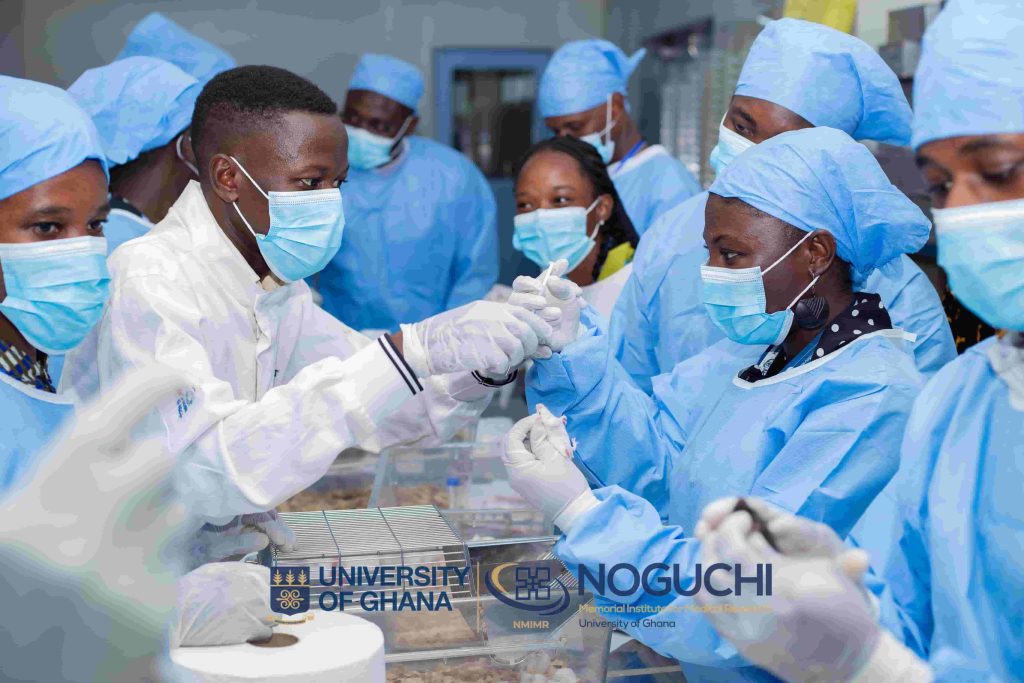
An image of young scientists in action, gaining hands on laboratory research experience.
Priscilla Kissi: As you retire, if you could correct one common misconception people have about animal experimentation, what would it be?
Dr. Adjei: A common misconception is that animal experimentation is carried out carelessly or without ethical consideration. In reality, modern biomedical research involving animals is highly regulated, ethically reviewed, and conducted under strict welfare standards. The goal is to minimize pain and distress while generating knowledge that can improve human and animal health. At the end of the day, our mission is to support science that improves lives. Whether through better medicines, vaccines, diagnostics, or research training, I believe that ethical high-quality biomedical research is essential for addressing Africa’s health challenges and building a healthier future for all.
Priscilla Kissi: Thank you, Dr. Adjei, for shedding light on the importance of ethical animal research and its role in advancing health. Your work is a powerful reminder that responsible science can help build a healthier future for all.
Dr. Adjei: Thank you. It has been a pleasure sharing my perspective.