

Malaria remains one of the leading causes of illness and death globally, with sub-Saharan Africa bearing the greatest burden of the disease. Among its most severe complications is cerebral malaria, a life-threatening condition that continues to pose significant public health challenges due to its high mortality rate and the long-term neurological complications experienced by many survivors. Ongoing research is therefore focused on improving the understanding of the disease and identifying innovative approaches to enhance patient outcomes.
Against this backdrop, the Noguchi Memorial Institute for Medical Research (NMIMR) hosted a Special Institutional Seminar at the NMIMR Conference Hall on Thursday, June 25, 2026. The seminar featured Prof. Jonathan K. Stiles, Chair of the Department of Microbiology, Biochemistry, and Immunology at Morehouse School of Medicine, USA, who delivered a presentation titled “Cerebral Malaria: Development of Novel Biomarkers and Interventions Against Mortality and Post-Treatment Sequelae.”


Participants at the seminar listening attentively as Prof. Jonathan K. Stiles discusses emerging approaches to reducing mortality and long-term neurological complications associated with cerebral malaria.
Prof. Stiles explained that although antimalarial drugs effectively eliminate the malaria parasite, approximately 20–30% of patients with cerebral malaria still die, while a similar proportion of survivors develop long-term neurological complications. According to him, toxic substances, including heme and Histidine-Rich Protein 2 (HRP2), released during infection trigger inflammation, damage the blood-brain barrier and contribute to brain injury. He emphasised that while antimalarial drugs eliminate the parasite, they do not reverse the damage caused to the brain, underscoring the need for reliable biomarkers to identify patients at the greatest risk of severe disease and enable timely clinical intervention and more intensive patient management.
He also presented findings showing that several biomarkers, including CXCL10, PF4 and angiopoietins, were strongly associated with disease severity. Among these, Angiopoietin-2 (Ang2) and the Ang2/Ang1 ratio demonstrated strong potential in predicting disease outcomes. He noted that these biomarkers could help clinicians identify high-risk patients, monitor treatment response and support more informed clinical decision-making, ultimately improving survival and reducing long-term neurological disability.
Prof. Stiles also showcased promising evidence that adjunctive therapies such as Neuregulin-1 (NRG-1) and Hydroxyurea (HU) improved survival, reduced inflammation and protected brain function. He explained that these therapies have the potential to complement standard antimalarial treatment by protecting the brain from further damage, thereby reducing mortality and long-term neurological complications.
In addition, Prof. Stiles presented findings from experimental studies, which revealed that cerebral malaria can cause early brain lesions and lasting neurological complications, including memory impairment, learning difficulties, attention deficits, behavioural changes and developmental delays. He noted that ongoing follow-up studies are helping researchers better understand these long-term effects and identify interventions that could improve neurological recovery and the quality of life of survivors.
The seminar provided participants with valuable insights into advances in cerebral malaria research and underscored the importance of translating scientific discoveries into improved patient care. It concluded with an interactive question-and-answer session, during which participants engaged Prof. Stiles on the research findings and their implications for malaria diagnosis, treatment and patient care. The discussions reinforced the importance of continued research and collaboration in advancing innovative solutions to combat malaria while reaffirming NMIMR’s commitment to biomedical research, scientific collaboration and capacity building to address pressing public health challenges.


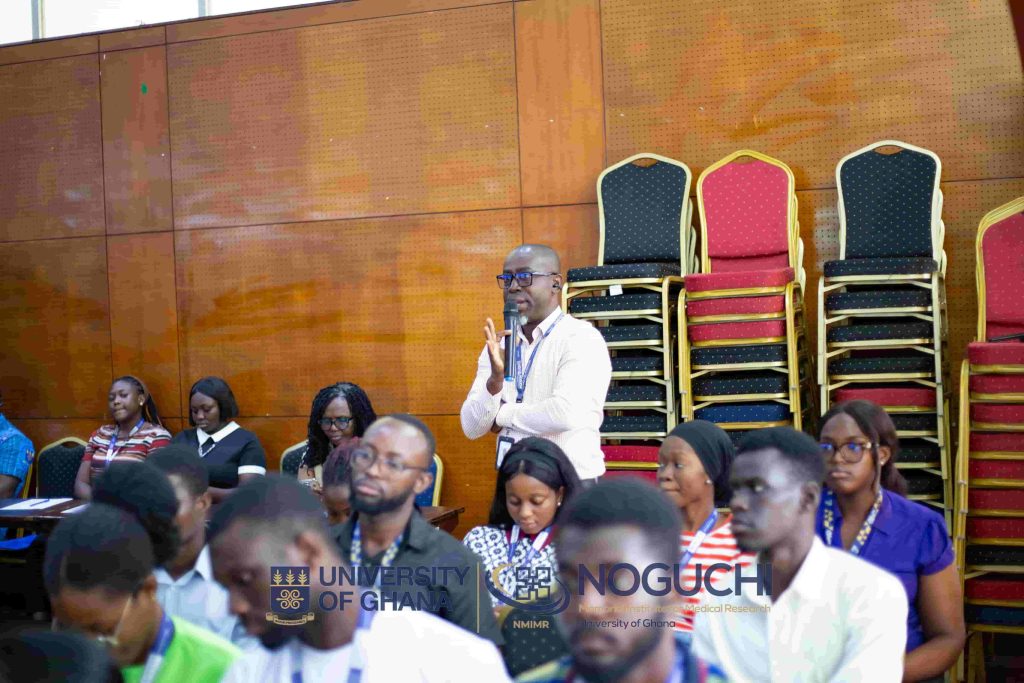
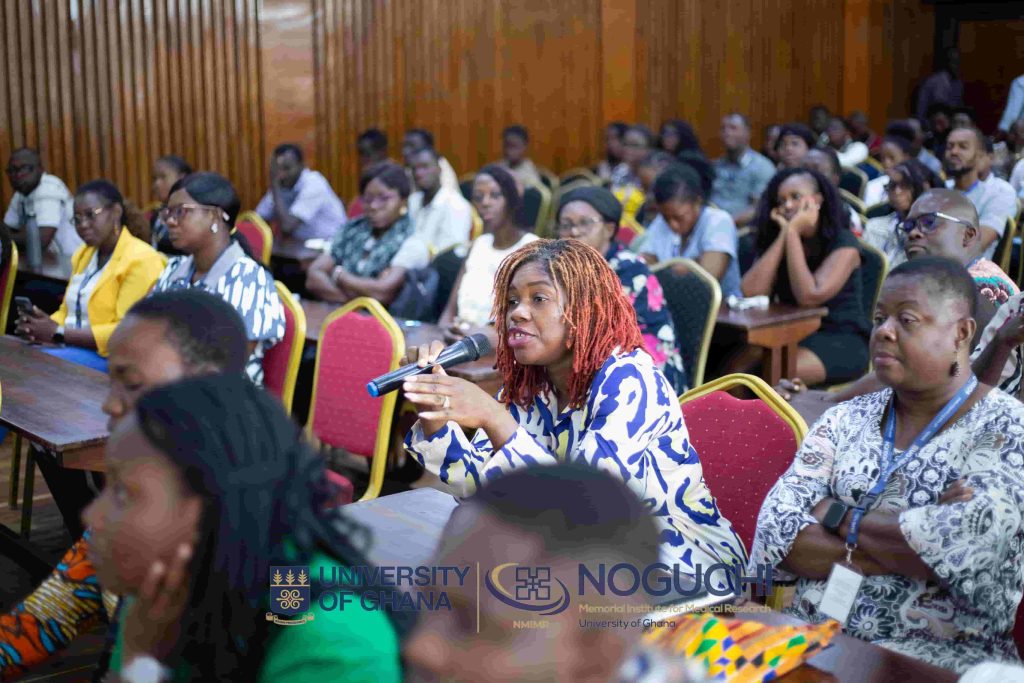
Participants engage Prof. Jonathan K. Stiles during the interactive question-and-answer session following his presentation on cerebral malaria research.