
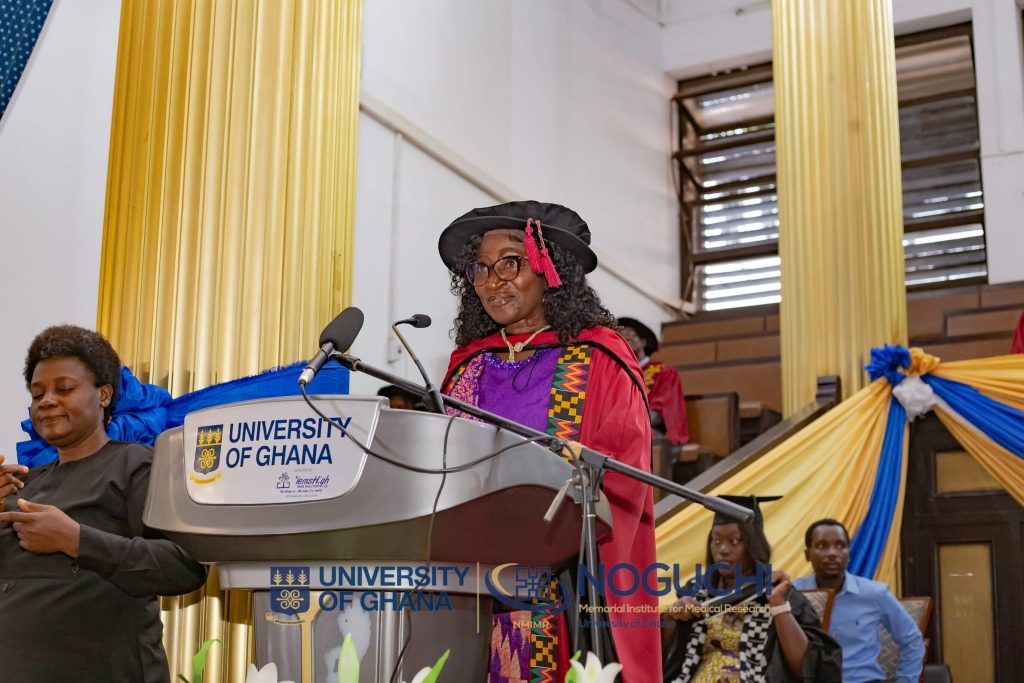
Prof. Regina Appiah-Opong is a Ghanaian Toxicologist whose research focuses on drug discovery from medicinal plants, toxicology, and pharmacology. At NMIMR, she has dedicated her career to identifying safe and effective plant-based therapies for diseases such as cancer and malaria, while advancing research on the safety of herbal medicines, including drug interactions and environmental toxins.
Prof. Appiah-Opong’s work integrates traditional medicine and modern science by promoting evidence-based herbal medicines that improve healthcare. She is also passionate about mentoring young scientists and fostering research collaborations that contribute to better health outcomes in Ghana and beyond.

Prof. Regina Appiah-Opong, Professor of Toxicology, Department of Clinical Pathology, Noguchi Memorial Institute for Medical Research (NMIMR), University of Ghana.
In this edition of our Researcher Spotlight, we had the opportunity to speak with Prof. Appiah-Opong, a leading Toxicologist whose work focuses on drug discovery from medicinal plants and advancing safe, effective therapies for human health.
Priscilla Kissi: What first drew you into science and a career in drug discovery from natural sources?
Prof. Appiah-Opong: My interest in science began at St. Louis Secondary School in Kumasi, where I was encouraged to pursue science and challenged to excel academically. I later studied Biochemistry at the University of Science and Technology, now Kwame Nkrumah University of Science and Technology, where my undergraduate research on compounds from cocoa pods sparked my interest in natural products. My interest in the medicinal properties of plants inspired me to purse research on antimalarial medicinal plants during my MPhil studies in the Department of Biochemistry, Cell and Molecular Biology at the University of Ghana. Building on this foundation, my PhD research focused on the drug- interaction potential of bioactive compounds in medicinal plants. This interest grew during my time at the Noguchi Memorial Institute for Medical Research, where I worked on malaria research and eventually explored medicinal plants as potential sources of new drugs. A post-doctoral opportunity at the Department of Pharmacology – Yale University, USA, further strengthened my passion for natural product drug discovery and cancer research, shaping the direction of my career.
Priscilla Kissi: Bringing together traditional knowledge and modern science is a key part of your work. How do you integrate traditional medicinal knowledge with modern laboratory science in your research?
Prof. Appiah-Opong: Traditional medicine has guided healthcare in African communities for generations, so it provides an important starting point for our research. We work closely with herbal medicine practitioners to identify plants with therapeutic potential and then use modern laboratory methods to evaluate their safety, effectiveness, and active compounds. This approach helps us build scientific evidence around traditional remedies while creating opportunities for drug discovery. Although challenges such as standardization, funding, and intellectual property remain, combining indigenous knowledge with modern science offers significant potential for improving healthcare and developing new medicines
Priscilla Kissi: Your work focuses primarily on anti-cancer and anti-malaria agents. What does this mean and what has been one of the most interesting findings so far?
Prof. Appiah-Opong: This means that we are searching for substances that can be used against cancer and malaria. Malaria remains a major problem, especially for children under 5 years. The disease remains endemic in Ghana, and drug resistance continues to emerge, so it is important to continue searching for more effective and safer therapies. We have confirmed and identified several medicinal plants with interesting antimalarial activity.
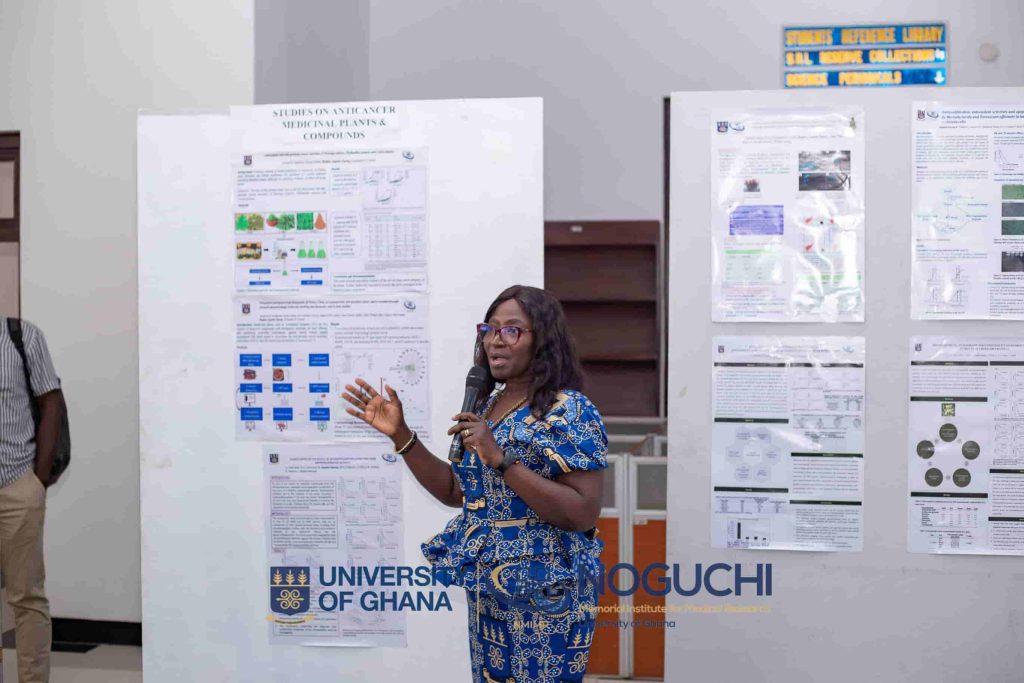
Prof. Appiah-Opong shares insights on medicinal plants for anti-cancer and anti-malarial drug discovery as part of her Inaugural lecture at the University of Ghana.
Priscilla Kissi: In Ghana, people often combine prescribed medicines with herbal remedies, which makes studying their interactions especially important. What are the key challenges in studying drug–drug and herb–drug interactions in Ghana?
Prof. Appiah-Opong: A key challenge is that most study systems are not fully tailored to African populations, so they may not reflect how our bodies respond to drugs. We also cannot test drug combinations directly in humans, so we rely on laboratory models. However, findings from animal studies may not accurately predict outcomes in humans. Moreover, herb–drug interactions are more complex than drug-drug interactions because herbal medicines contain multiple compounds, increasing the chance of interactions with prescribed drugs.
Priscilla Kissi: Your research also looks at toxins such as heavy metals and aflatoxins, could you briefly explain what these are, and why they are an important public health concern?
Prof. Appiah-Opong: Heavy metals are naturally occurring metallic elements with relatively high density that can become toxic to humans even at low concentrations. Common examples include lead, mercury, cadmium, arsenic, and chromium. Some metals such as iron, zinc, and copper, are essential in minute amounts but harmful in excess. Lead, mercury, and cadmium can be toxic and affect the brain, nervous system, kidneys, and other organs. In addition to heavy metals, naturally occurring chemical contaminants such as aflatoxins also pose significant public health risks. Aflatoxins are toxic substances produced by moulds that grow on foods like maize and grains. They are heat-stable, so cooking does not destroy them. Long-term exposure, even to low concentrations, is a major public health concern because it can cause serious illnesses, including increasing the risk of liver cancer.
Priscilla Kissi: Pharmacogenetics can sound complex, how would you explain it in a clear, simple terms to the public?
Prof. Appiah-Opong: Pharmacogenetics looks at how genes affect how our bodies respond to drugs. It explains why different people may not metabolize or respond to the same medicine in the same way. This is important because people in different regions may respond differently to drugs, and even combinations of prescribed medicines and herbal remedies can affect how the body processes treatment. Understanding these differences helps ensure safer and more effective use of medicines.
Priscilla Kissi: You’ve had a long and impactful career, with many contributions to science and public health. Looking back on your career, which achievement stands out as most meaningful to you, and why?
Prof Appiah-Opong: The most meaningful achievement for me is the impact on students. I initially did not plan to go into teaching, but I realized I had knowledge that needed to be shared. Over the years, I have taught and mentored many students and seeing them develop interests in areas like toxicology has been very fulfilling. Another key achievement is my research in malaria, HIV, and cancer, where we have generated findings that improve treatment decisions and reduce the use of ineffective medicines.
We have also identified promising medicinal plant compounds with selective activity against cancer and malaria cells, which is encouraging for future drug development.
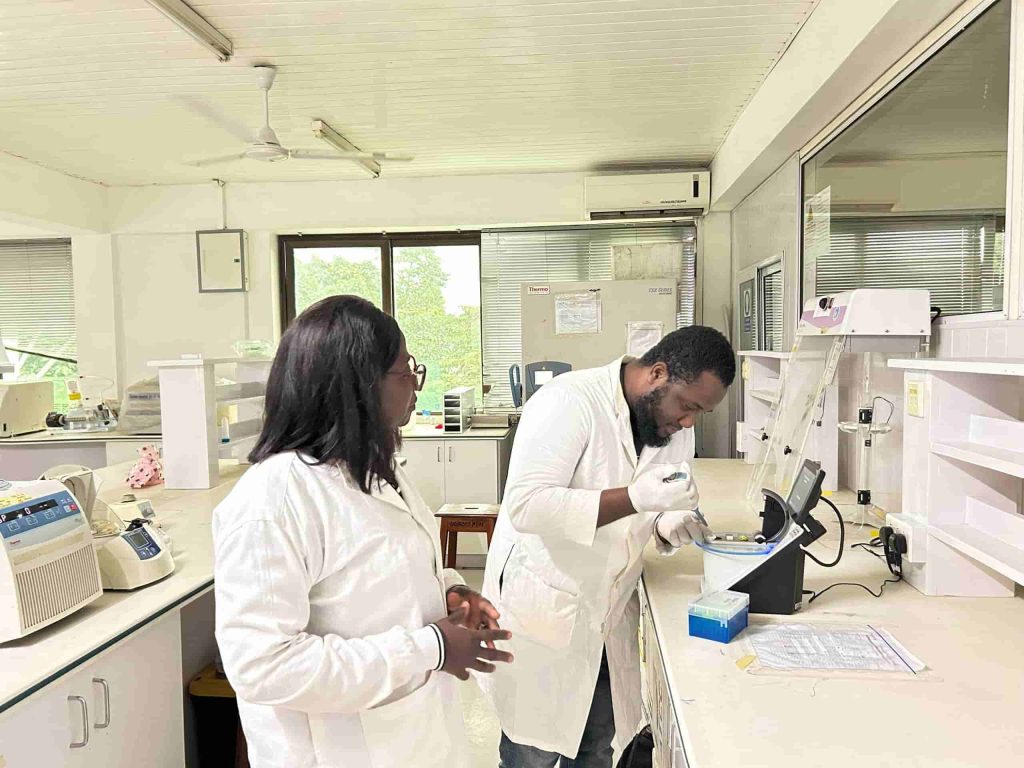
Prof. Appiah-Opong, working with a PhD student in the lab, which reflects her dedication to teaching, mentorship, and capacity building in biomedical research.
Priscilla Kissi: What advice would you give to young scientists interested in pharmacology, toxicology, or drug discovery?
Prof Appiah-Opong: This is an exciting field with many opportunities, but you need to be focused on what you want to do. We need more young scientists in drug discovery to help move this area of research in Ghana to the next level. Don’t focus only on money. Think about what you can contribute to your country and the impact you can make. The rest will follow.
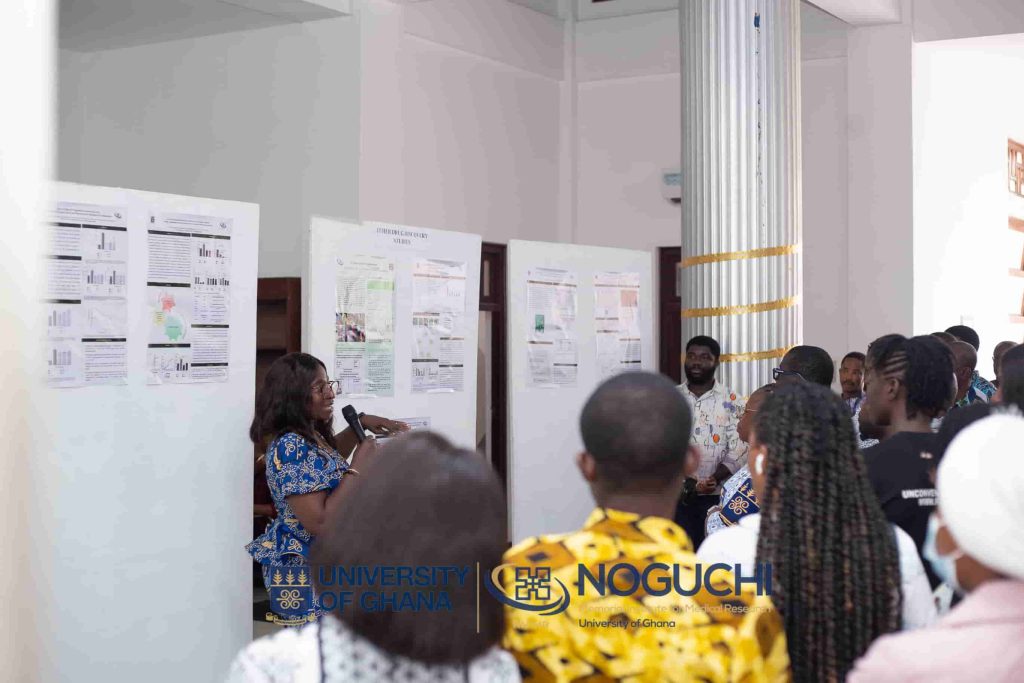
Prof. Appiah-Opong sharing insights on her research works on an exhibition of her scholarly works at the Balme Library, before her Inaugural lecture.
Priscilla Kissi: As you retire, what legacy do you hope to leave for your students, colleagues, and the wider scientific community to carry forward?
Prof Appiah-Opong: I have left behind a lot of work that can be continued and trained many students and staff. I am pleased that we set up a cancer research laboratory and facilitated acquisition of various analytical equipment in the Department of Clinical Pathology as Head of Department to enhance work in the department. I hope that the work will continue to grow beyond me, inspiring future generations of students and researchers to build upon the foundation we have established. I hope my students will carry forward the values of hard work, honesty, and integrity in research. Scientific progress must be built on truth and transparency; if a finding is not observed or a result cannot be established, it should be reported honestly rather than authored or misrepresented upholding these principles is essential for maintaining trust and advancing knowledge. I also hope they will continue to publish impactful research, pursue new discoveries, and build on what has been started, so that the knowledge generated and contributions made will continue to advanced science and improve lives in Ghana and beyond.
Priscilla Kissi: A legacy of hard work, honesty, and continuous discovery built on research that continues to grow beyond one person. Thank you, Professor Appiah-Opong, for your dedication to science, mentorship, and advancing research for Ghana and beyond.
Prof. Appiah-Opong: Thank you. It has been a pleasure to share my journey.