

Researchers at the Noguchi Memorial Institute for Medical Research (NMIMR) are gaining new insights into how infectious diseases persist and spread in Ghana, using modern laboratory and genomic approaches to better understand schistosomiasis and non-typhoidal Salmonella (NTS).
The findings were shared at a Special Institutional Seminar held on Tuesday, 8 September 2026, at the NMIMR Conference Hall, where Dr Yvonne Ashong of the Parasitology Department and Dr Vida Adjei of the Bacteriology Department presented their respective research.
Dr Ashong, whose presentation was titled “From Treatment Response to Hybridisation: Unravelling Schistosome Genetic Complexity in Ghana,” discussed how her research has evolved from studying the effectiveness of praziquantel treatment to exploring the diversity and transmission of schistosomes in Ghana.
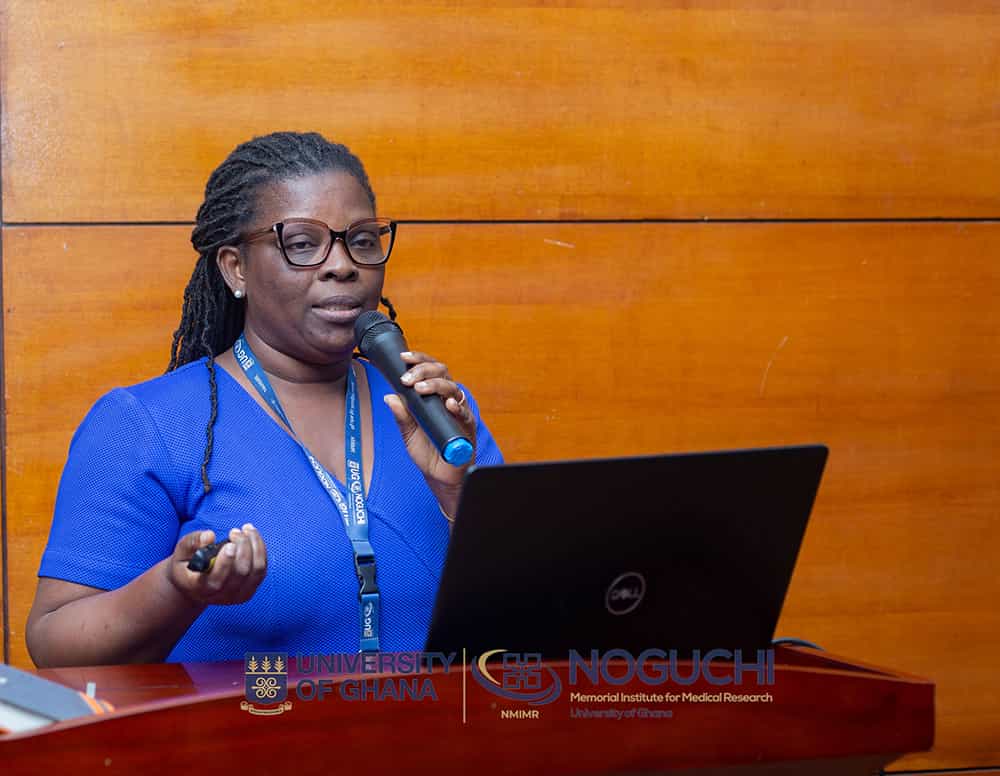
Dr. Yvonne Ashong presenting her research on schistosomiasis at the Special Institutional Seminar.
Her initial community-wide treatment studies showed substantial reductions in infection following praziquantel treatment. Two months after treatment, the prevalence of Schistosoma mansoni declined from 56.7 per cent to 16.7 per cent, while S. haematobium prevalence fell from 27.7 per cent to 7.7 per cent.
The subsequent return of infection, however, indicated that transmission was continuing and that treatment alone may not be sufficient to achieve long-term control.
To understand why infection persisted, Dr Ashong’s research included monitoring freshwater snails that play an important role in the transmission of schistosomiasis. The studies found that human-infective schistosomes continued to circulate after treatment and that different types of schistosomes, including those associated with humans and livestock, were present in the same areas.
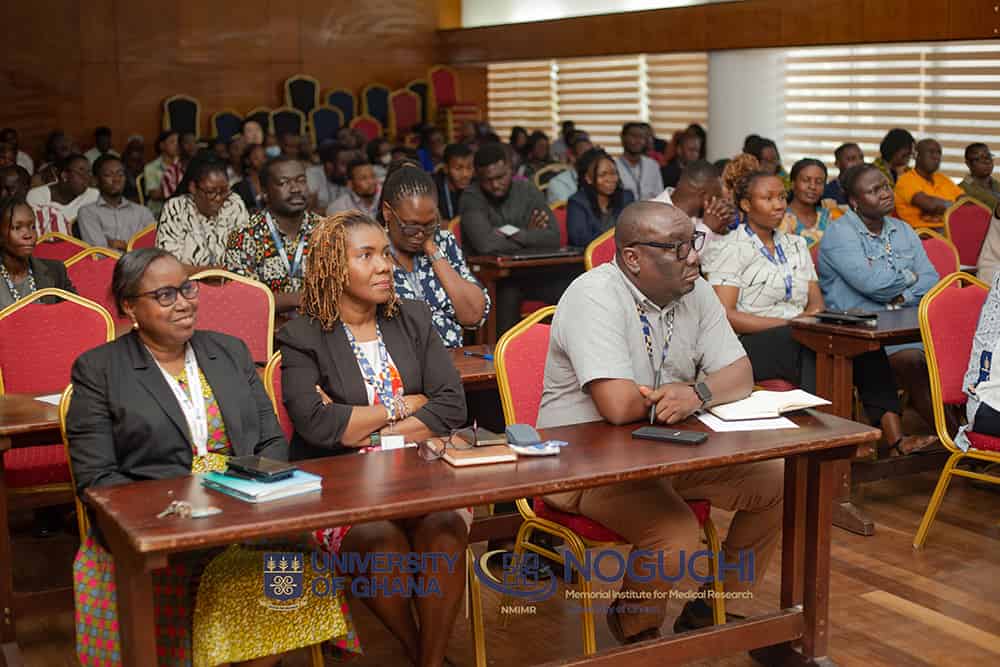
Participants listen as researchers share findings on schistosomiasis and non-typhoidal Salmonella.
Further laboratory analysis revealed a greater diversity of schistosomes than had previously been recognised. Among samples initially identified as S. haematobium, S. bovis was detected in 33.3 per cent, while hybrids involving S. haematobium and S. bovis were identified in 11.5 per cent of the samples.
The research also found schistosome infection in 42.1 per cent of cattle examined, with some parasite lineages shared between humans and cattle. These findings point to a more interconnected pattern of transmission involving people, livestock and the environment.
Dr Ashong’s ongoing work will build on these findings by examining how these different parasite forms survive, adapt and persist. The research is expected to provide further evidence to support efforts to strengthen schistosomiasis control and elimination in Ghana.
The seminar also highlighted another important infectious disease challenge, as Dr Vida Adjei examined the transmission of NTS across human, animal, food and environmental settings.
In her presentation, titled “Genomic Epidemiology, Transmission Dynamics, and Intervention Strategies for Non-Typhoidal Salmonella Across Human, Animal, Food, and Environmental Interfaces in Ghana,” Dr Adjei highlighted gaps in understanding how NTS circulates in Ghana and how infections may be connected across different sources.
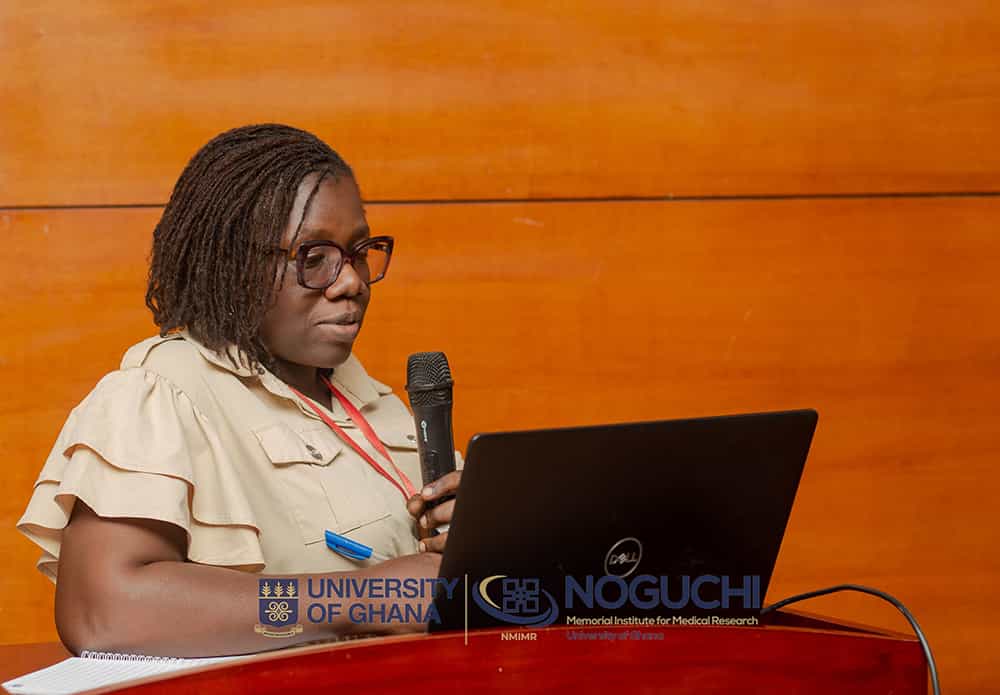
Dr Vida Adjei highlighting a One Health approach to understanding NTS transmission across human, animal, food and environmental settings.
Previous research found NTS in a range of animal-derived food products in the Greater Accra Region, with pork and raw milk products showing particularly high levels of contamination. The research also identified multidrug-resistant and virulent Salmonella types, including Salmonella enterica serovars Kaapstad and Enteritidis, carrying genes associated with antimicrobial resistance and disease-causing ability.
Building on this work, Dr Adjei’s proposed study will examine NTS from people, livestock, food and environmental sources across multiple regions of Ghana. Using whole-genome sequencing, the study will help researchers compare the bacteria found in different settings and better understand how they may be connected.
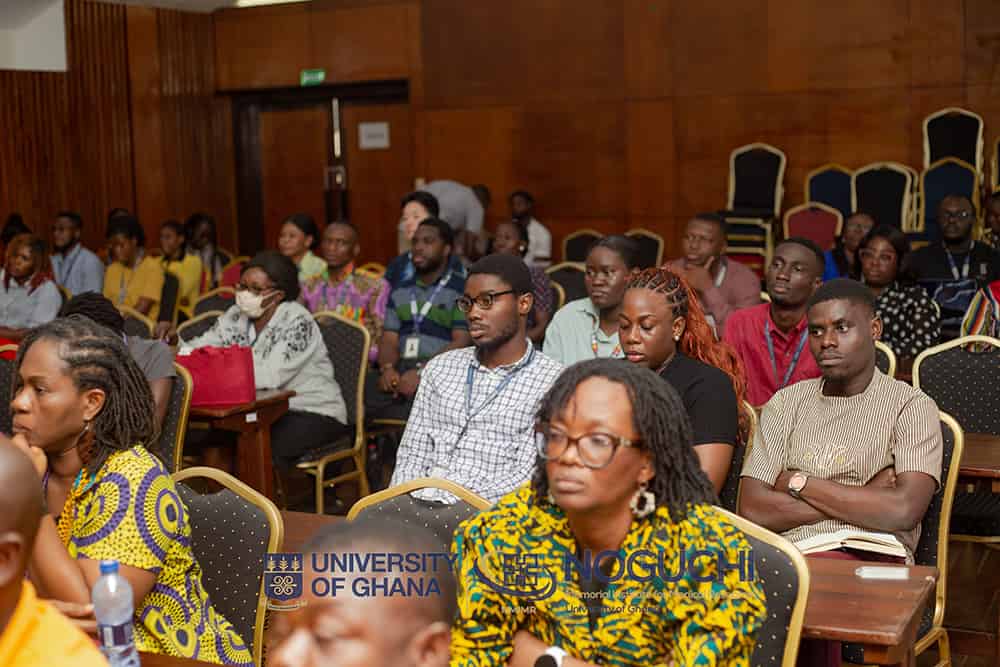
Participants listen attentively to presentations during the Special Institutional Seminar at NMIMR.
The research will also combine laboratory findings with information about farms and food production and distribution to investigate possible routes through which NTS moves between animals, food, people and the environment. This One Health approach is intended to provide a clearer picture of the factors contributing to the spread of NTS and antimicrobial resistance.
The proposed research will further explore practical measures to reduce transmission, including improved biosecurity, responsible use of antimicrobials in livestock production and strengthened food-safety practices at points of sale. The findings are expected to contribute to stronger disease surveillance, outbreak preparedness and evidence-based approaches to preventing foodborne salmonellosis in Ghana.
The presentations were followed by a question-and-answer session, during which participants sought clarification on aspects of the studies, including sampling locations, differences between environments, sample-size determination and the statistical considerations involved in the research. Questions were also raised about the relatively low isolation rates observed during preliminary investigations and how this would be addressed in determining an adequate sample size.
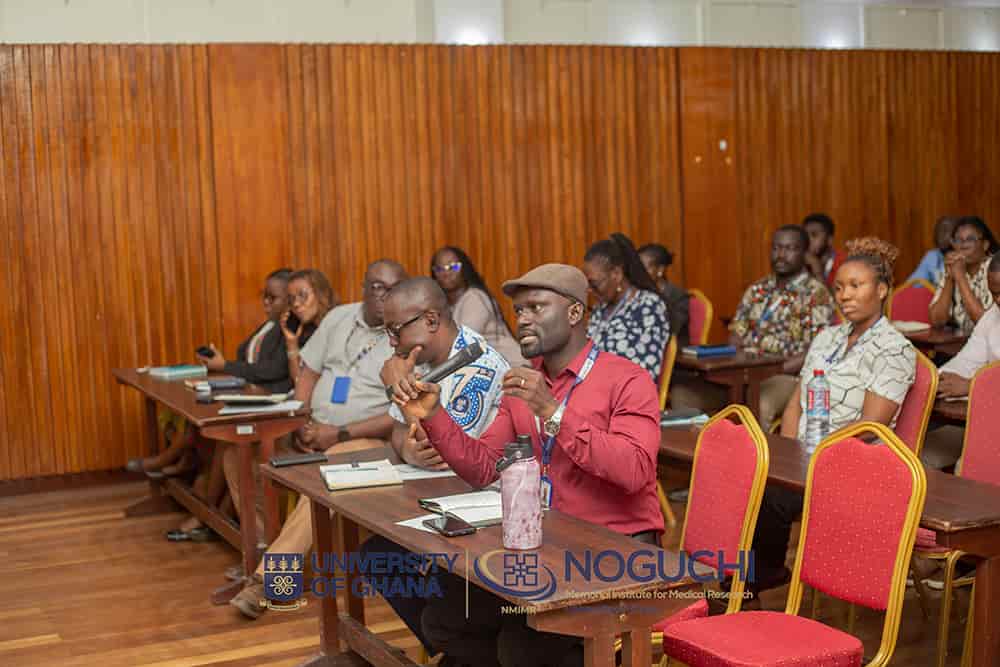
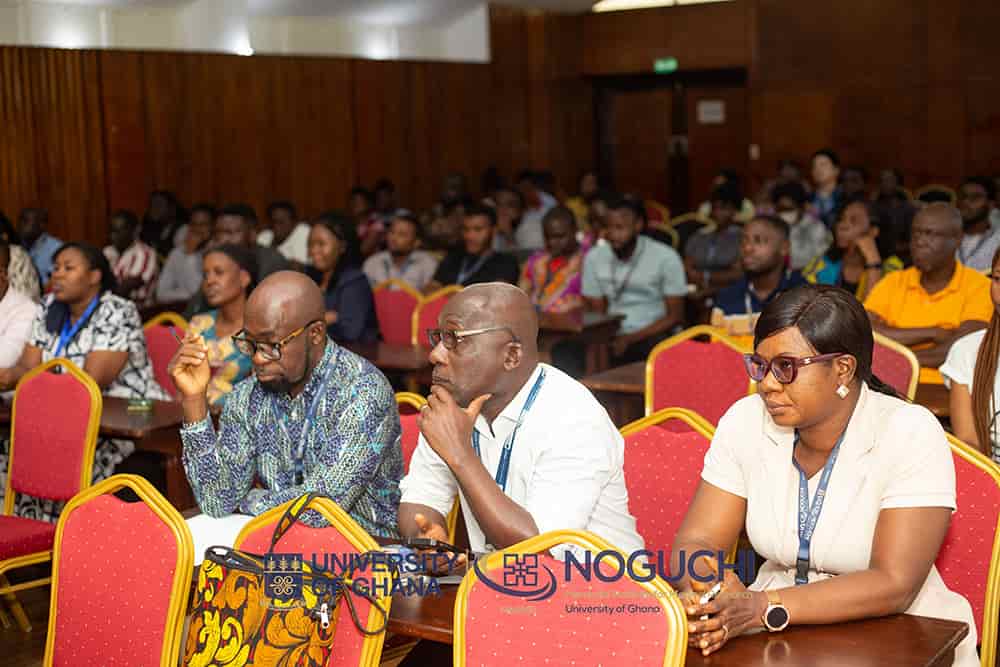
Participants engage with the presenters during the question-and-answer session.
The seminar highlighted the breadth of infectious disease research being undertaken at NMIMR and the value of combining laboratory, molecular and genomic approaches to better understand diseases that affect communities. The research presented by Dr Ashong and Dr Adjei underscores the importance of looking beyond individual pathogens and considering the wider connections between people, animals, food and the environment in efforts to strengthen disease prevention and control in Ghana.