
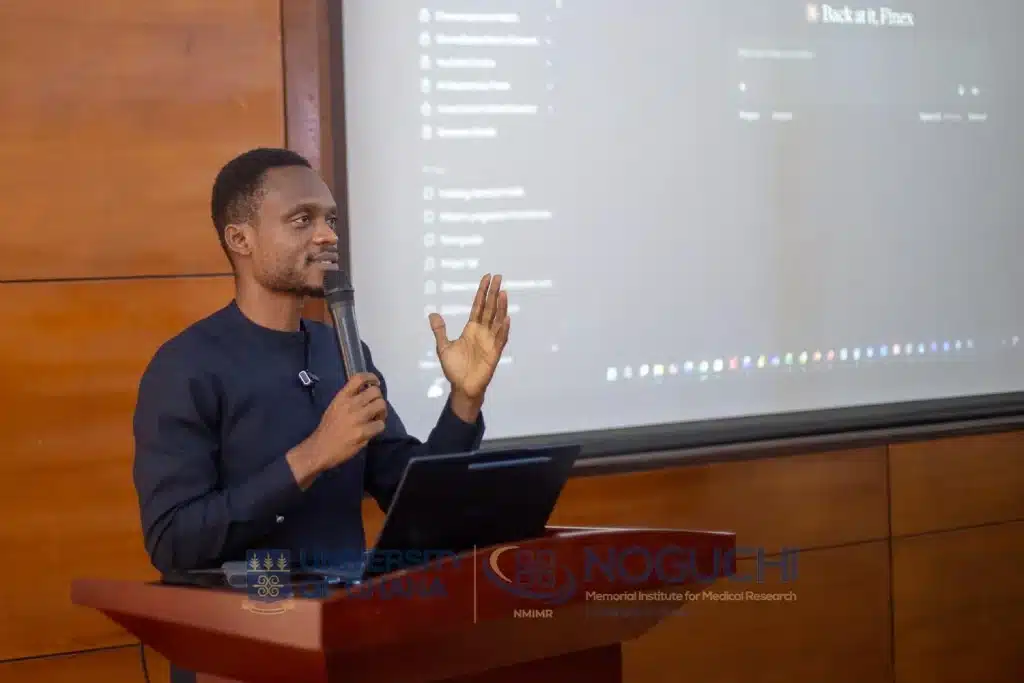
As Artificial Intelligence (AI) continues to reshape the way information is accessed, analysed and communicated, researchers are increasingly exploring how these tools can support their work while maintaining scientific rigour and human judgement. Against this backdrop, the Noguchi Memorial Institute for Medical Research (NMIMR), University of Ghana, held a Special Institutional Seminar to equip researchers with practical approaches to using AI in the research writing and reporting process.
The seminar, held on 29 September 2026 at the NMIMR Conference Hall, was facilitated by Mr. Bernard Obeng Boateng, Lead Trainer at Finex Skills Hub, on the theme “A Practical Session on Using AI Tools to Support the Research Writing and Reporting Process, from First Draft to Final Output.”
The practical session focused on helping researchers move beyond the casual, one-off use of AI tools towards more structured approaches that can support different stages of research work, including literature reviews, drafting, analysis, findings and reporting for different audiences.
Mr. Boateng encouraged participants to view AI as a thinking and writing partner rather than a replacement for human analysis, judgement and expertise. He explained that while AI has evolved from systems designed primarily to process information to increasingly sophisticated tools capable of reasoning, making decisions and carrying out tasks, researchers remain responsible for evaluating and verifying the information generated.
A key focus of the seminar was the importance of providing AI with appropriate context. Participants were introduced to Retrieval-Augmented Generation (RAG), which enables AI tools to work with specific documents and information supplied by the user. Researchers can, for instance, provide research papers, reports, datasets, study protocols and other relevant materials and instruct the AI to ground its responses in those sources. This approach can improve the reliability of outputs and make it easier to verify information.
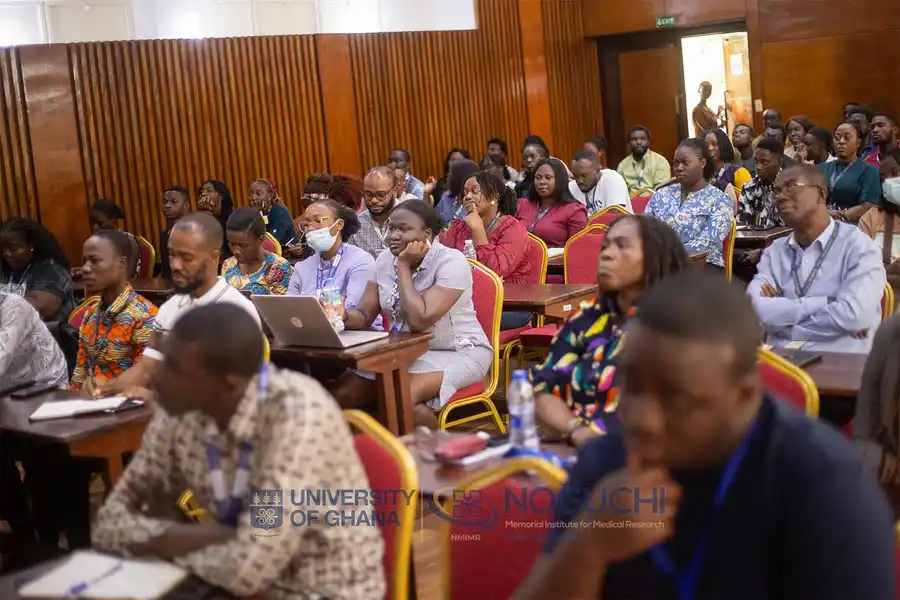
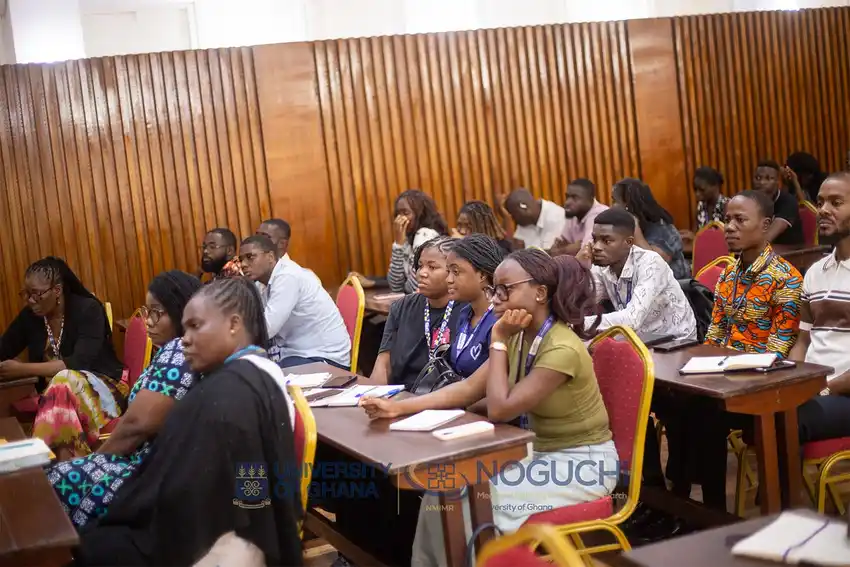
A section of participants at the Special Institutional Seminar on using AI to support research writing and reporting.
The seminar also introduced AI Projects, which provide a structured environment for organising files, instructions and relevant context around a particular research activity. Participants were shown how previous reports, study protocols, interview data and other research materials could be brought together within a project, allowing AI tools to work with an established body of information rather than requiring researchers to provide the same context repeatedly.
Another important concept was AI Skills, which can be used to create reusable workflows for tasks that researchers perform regularly. Using survey data analysis as an example, Mr. Boateng demonstrated how several instructions could be combined into a single workflow that could subsequently be reused. Such approaches, he noted, can save time and promote consistency in research-related tasks.
The session further explored the growing capabilities of AI agents and desktop-based AI tools, which can perform multi-step tasks and work with files and other applications. Participants were encouraged to explore these capabilities while remaining mindful of issues relating to data privacy, security and the level of access granted to AI tools.
The seminar also highlighted NotebookLM as a useful tool for working with multiple research sources. Participants were introduced to features that can support the generation of reports, mind maps, slide presentations and audio summaries from provided materials. These capabilities can assist researchers in understanding complex information, preparing presentations and communicating research findings to different audiences.
The presentation was followed by a question-and-answer session, during which participants sought clarification on issues including the selection of appropriate AI models, managing AI usage and credits, and data security when working with AI tools. In discussing model selection, Mr. Boateng explained that routine activities such as document review, drafting and summarisation may not require the most advanced models, while more complex tasks such as coding, modelling and advanced analysis may benefit from higher-capacity models. He also encouraged participants to select AI tools and models according to the task and exercise caution when sharing research and institutional information.
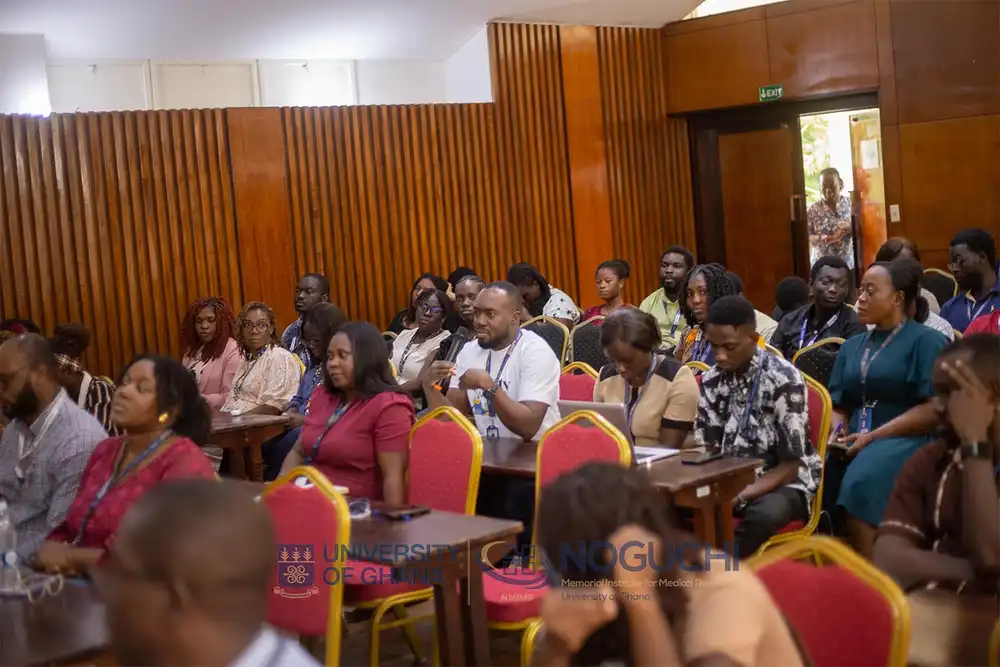
Participants engage with the facilitator during the seminar on the responsible use of AI in research.
The session provided NMIMR researchers with practical insights into incorporating AI into their research workflows while maintaining critical thinking, verification and responsible research practices. It underscored the growing importance of AI literacy in research and demonstrated how structured use of AI tools can support researchers from the first draft through to the final research output.