
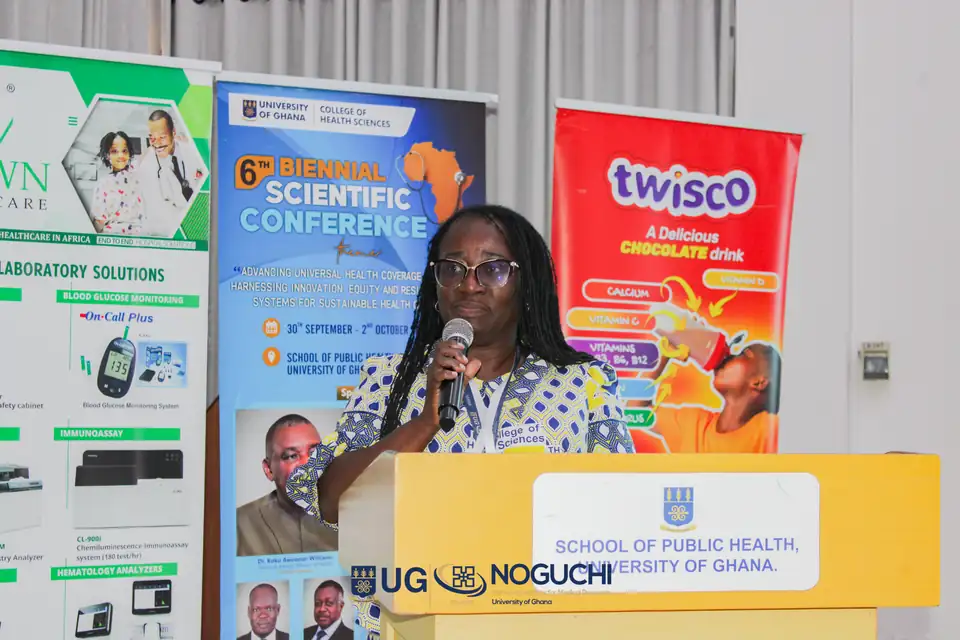
Researchers from the Noguchi Memorial Institute for Medical Research (NMIMR) gave expert presentations at the 6th Biennial Scientific Conference of the College of Health Sciences, University of Ghana. This year’s conference was held at the School of Public Health (SPH) Auditorium on Wednesday from 30 September to 2 October and brought attention to current research and approaches to addressing infectious disease threats in Ghana.
Three NMIMR researchers, Dr. Ivy Asantewaa Asante, Prof. Dziedzom K. de Souza and Prof. Beverly Egyir, contributed to the conference through presentations that highlighted One Health approaches to infectious disease research. Their topics demonstrated the links between human health, animal health and the environment in understanding and controlling disease transmission.
Dr. Ivy Asantewaa Asante, a Senior Research Fellow at the Department of Viral and Emerging Infections spoke on the surveillance of avian influenza viruses in Ghana. Her presentation, titled “From Poultry to Pandemic Risk for Humans: One Health Surveillance of Avian Influenza Viruses in Ghana,” highlighted findings from surveillance across poultry, live bird markets, wetlands, exposed human populations and environmental settings. She also discussed the evolution and zoonotic potential of circulating influenza viruses, as well as the importance of sustained surveillance, molecular characterization and collaboration across sectors to strengthen preparedness for emerging infectious disease threats.
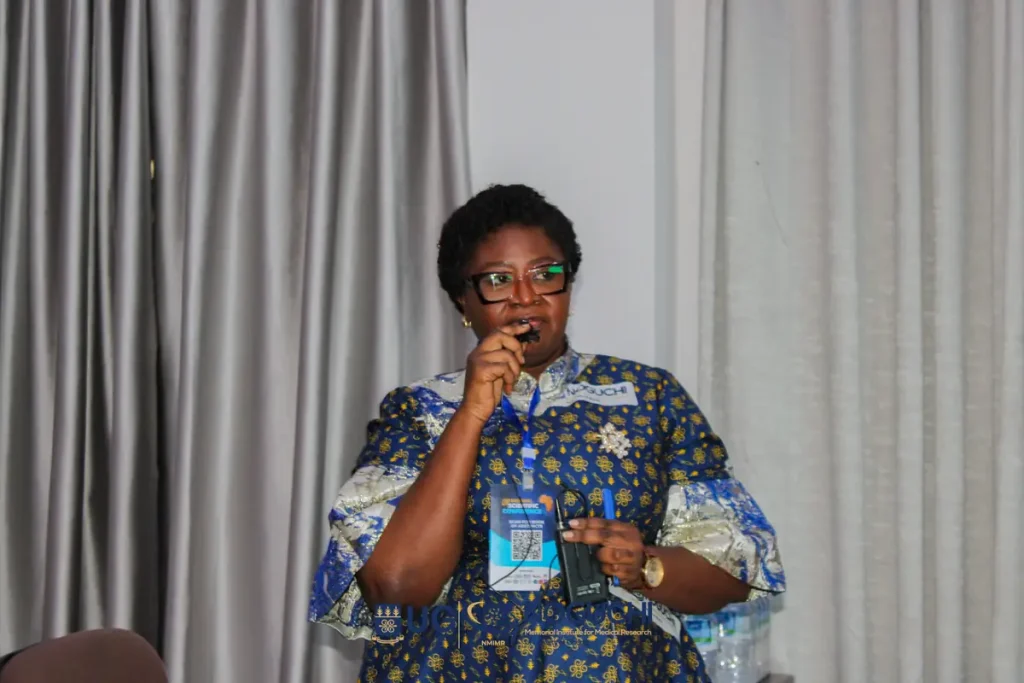
Dr. Ivy Asantewaa Asante highlights the importance of One Health surveillance in strengthening Ghana’s preparedness for avian influenza.
Prof. Dziedzom K. de Souza, an Associate Professor at the Department of Parasite and Vector Biology, and Head, Department of Toxicology and Cancer Biology, presented the cross-host transmission of Schistosomiasis in peri-urban Ghana from a One Health perspective. His presentation examined evidence of Schistosoma infections and hybrids shared between humans and cattle, and the role of shared freshwater sources and livestock-human interactions in sustaining transmission. He highlighted the need for integrated measures, including improved water, sanitation and hygiene, environmental interventions and better livestock management, to support the control and eventual elimination of schistosomiasis.
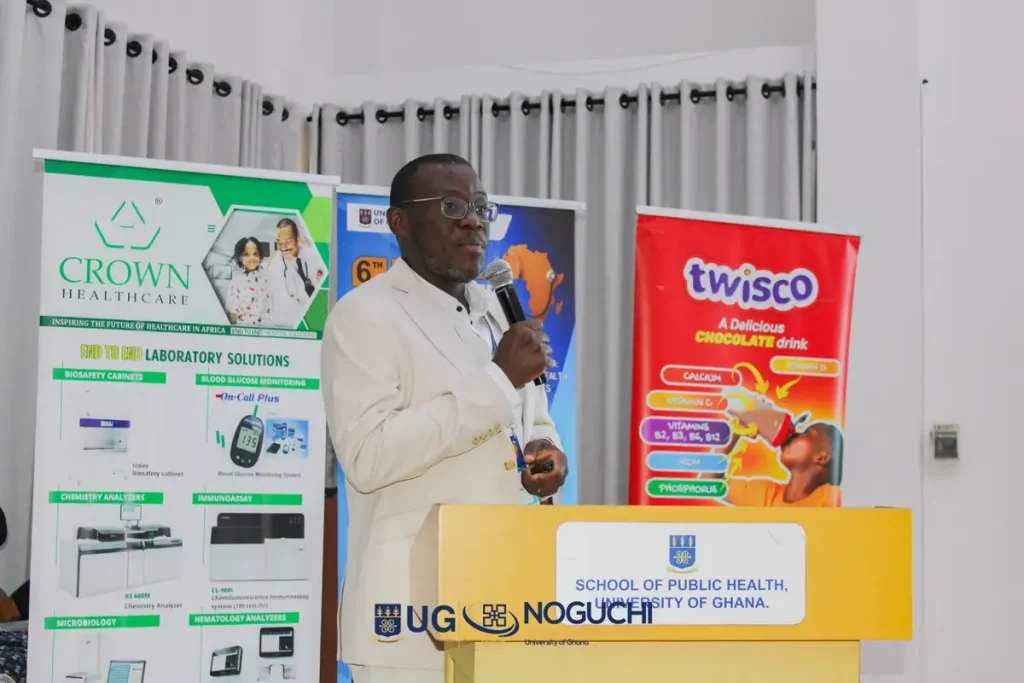
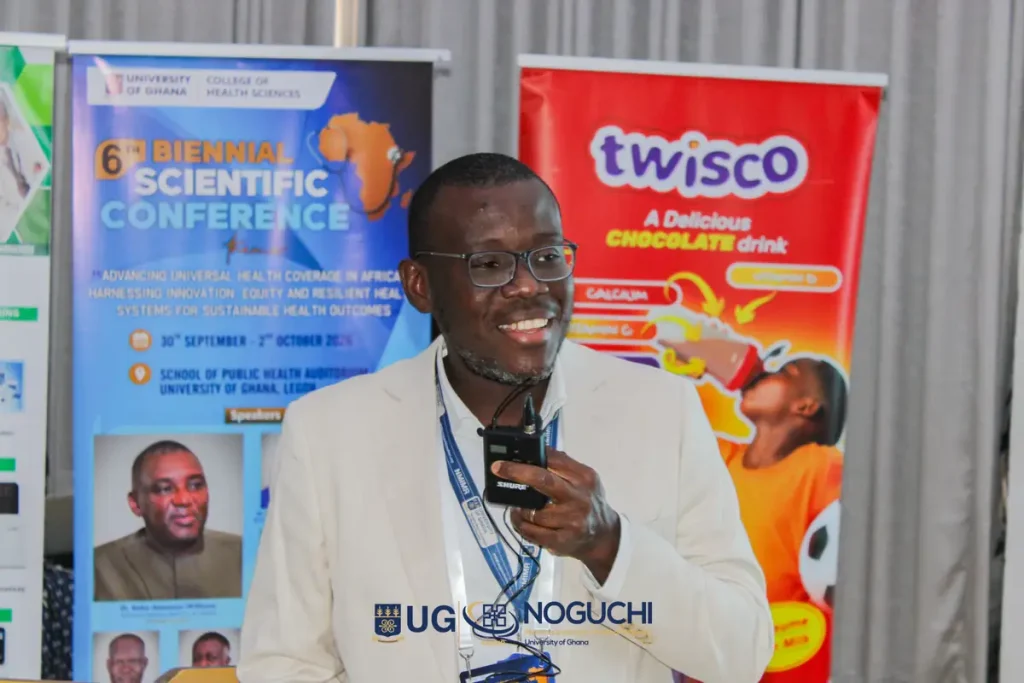
Prof. Dziedzom K. de Souza shares insights on schistosomiasis and One Health in peri-urban Ghana.
Prof. Beverly Egyir, an Associate Professor at NMIMR, presented on “Tracking Antimicrobial Resistance Across One Health Interfaces in Ghana.” Her presentation focused on tracking antimicrobial resistance (AMR) across human, animal, food and environmental health systems. She highlighted AMR surveillance activities in Ghana, including microbiology, antimicrobial susceptibility testing, whole-genome sequencing and wastewater monitoring. She also discussed the identification of resistant pathogens, high-risk bacterial clones and possible transmission pathways across different sectors. Her presentation emphasized the importance of strengthened laboratory capacity, genomic surveillance, workforce development and coordinated action across sectors in addressing AMR.
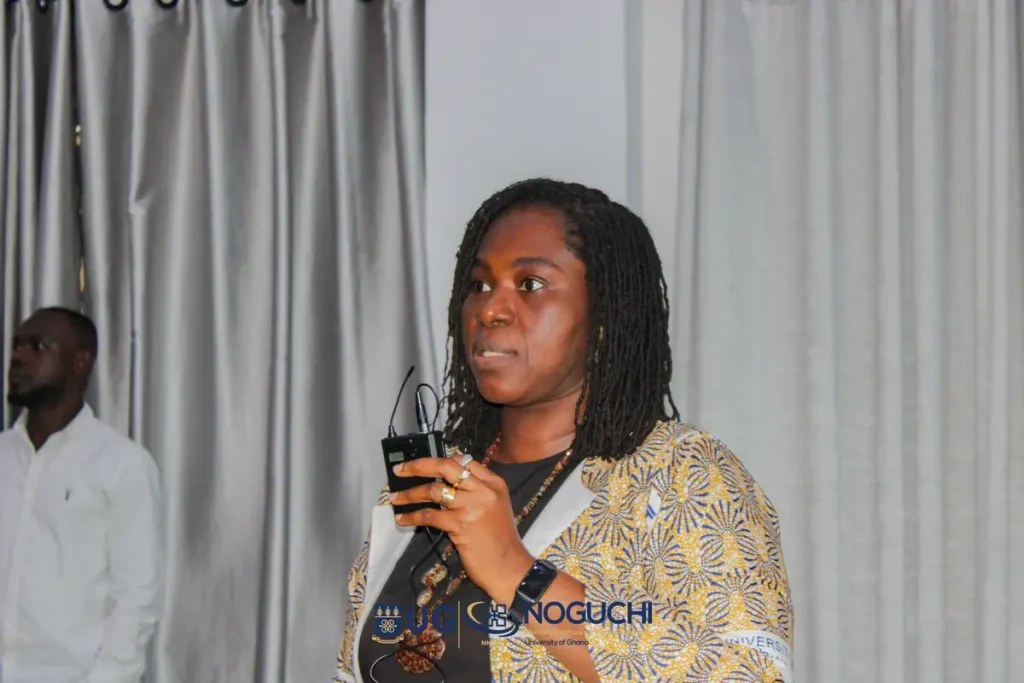
Exploring antimicrobial resistance across Ghana’s One Health landscape with Prof. Beverly Egyir.
The three presentations highlighted the importance of looking beyond individual diseases and considering the wider factors that influence transmission. By bringing together human, animal and environmental perspectives, the researchers demonstrated how surveillance, research and collaboration can contribute to better preparedness and disease control in Ghana. The session concluded with an engaging question-and-answer session, moderated by the MC, Prof. Adwoa Asante-Poku, Head of the Department of Bacterial Infections and Systems Biology
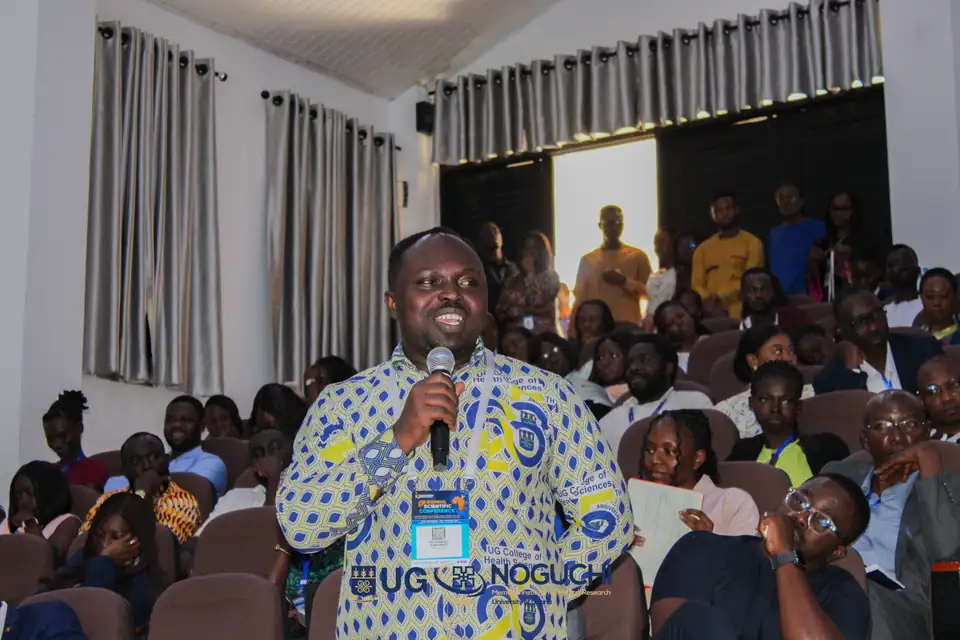
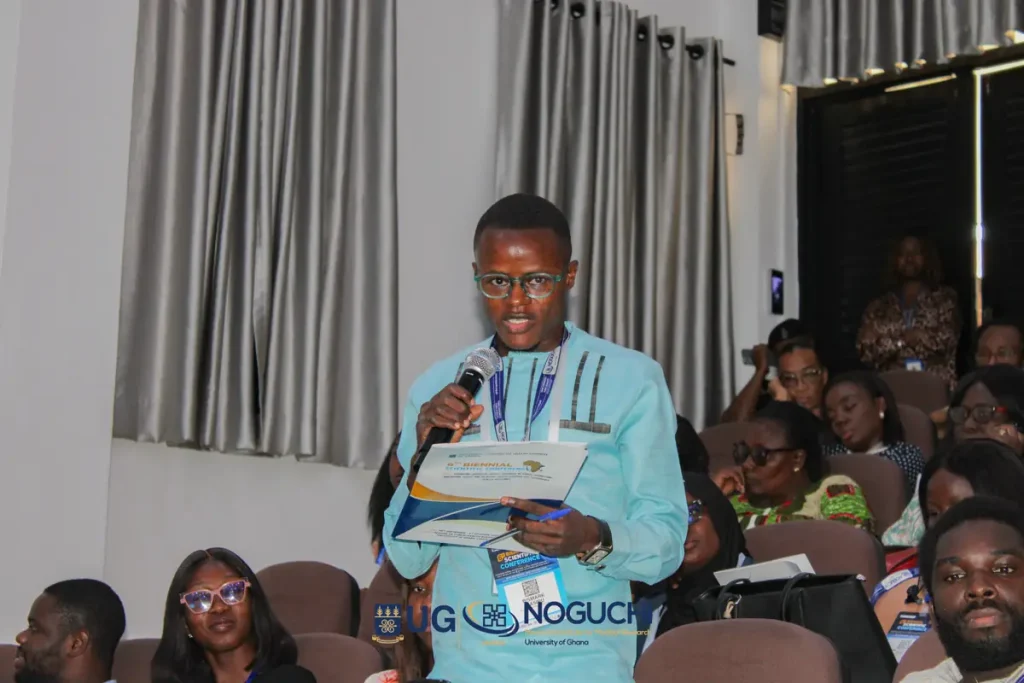
An engaging Q&A session filled with insightful discussions and shared perspectives.