
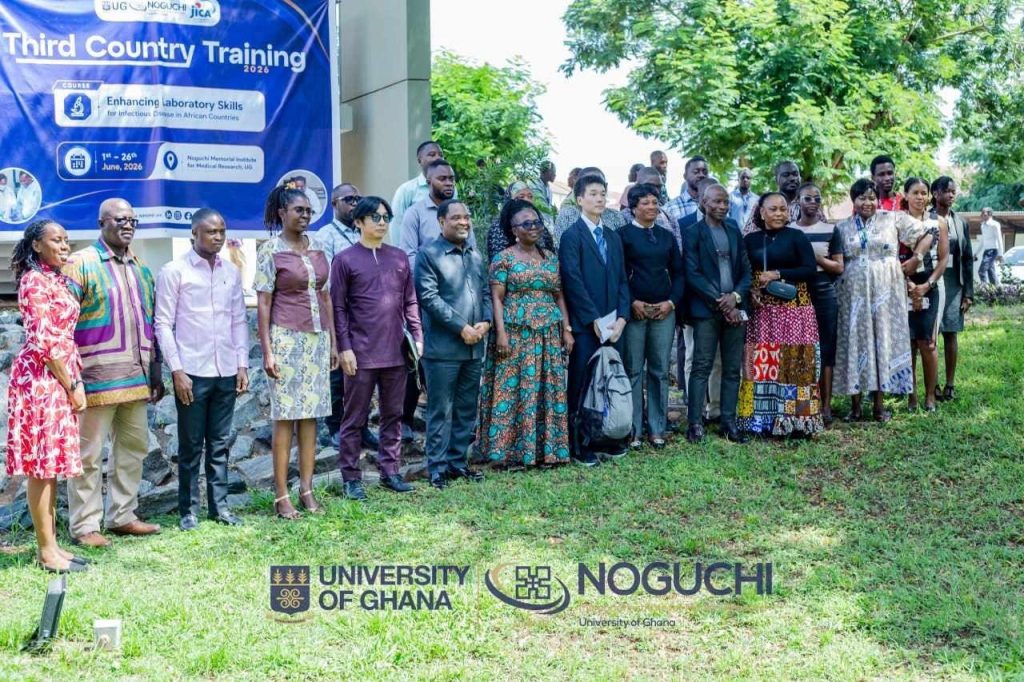
The Noguchi Memorial Institute for Medical Research (NMIMR), in collaboration with the Japan International Cooperation Agency (JICA), has commenced the 2026 Third Country Training Programme aimed at enhancing laboratory skills for infectious disease detection, diagnosis and response among healthcare professionals from across Africa.
The opening ceremony, held at the Institute’s Conference Hall on June 1, 2026, brought together representatives from the World Health Organization (WHO), the Embassy of Japan in Ghana, JICA, the University of Ghana and other stakeholders committed to strengthening health security on the continent.
The 2026 cohort comprises eight healthcare professionals from Ghana, Liberia, Nigeria, Sierra Leone, Togo and Zambia who will undergo intensive practical laboratory training at the NMIMR Advanced Research Laboratories (ARL) following an online component conducted between April and May 2026. The eight-week programme covers Foundation, Parasitology, Bacteriology and Virology, as well as Biosafety, Biosecurity and Laboratory Quality Management Systems.
Opening the ceremony, the Director of NMIMR, Professor Dorothy Yeboah-Manu, welcomed participants, partners and distinguished guests and expressed appreciation to JICA, the Embassy of Japan, WHO and other collaborators for their continued support. She noted that the programme, which began in 2019 in response to the Ebola outbreak in West Africa, has evolved into a flagship capacity-building initiative that addresses a broad range of emerging and re-emerging infectious diseases, including COVID-19, Marburg virus disease, Lassa fever, Mpox and Hantavirus.
Professor Yeboah-Manu emphasized that the increasing frequency of infectious disease outbreaks highlights the need for highly skilled scientists and health professionals capable of responding rapidly and effectively to public health emergencies. She encouraged participants to make the most of the training opportunity, engage actively with experts and colleagues, and build networks that would foster future collaboration across the region.
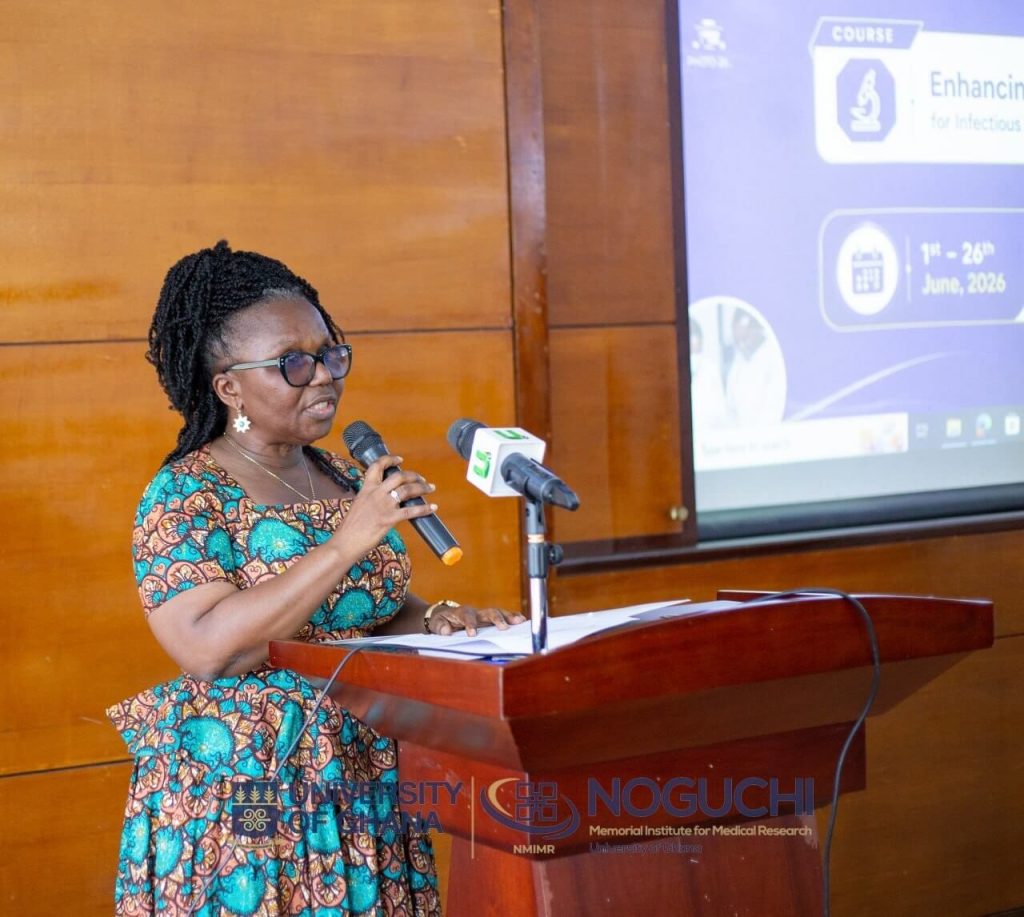
Professor Dorothy Yeboah-Manu, Director of NMIMR, delivering her welcome remarks at the opening ceremony.
Chairing the ceremony, the Provost of the College of Health Sciences, Professor Alfred Edwin Yawson, commended NMIMR and JICA for sustaining the programme since its inception in 2019. He noted that the initiative has contributed significantly to strengthening laboratory capacity across Africa and supporting the region’s response to major public health emergencies. Professor Yawson stressed the importance of equipping participants with practical skills and expertise to enhance preparedness and response to infectious disease outbreaks and reaffirmed the University of Ghana’s commitment to advancing health research and capacity development.
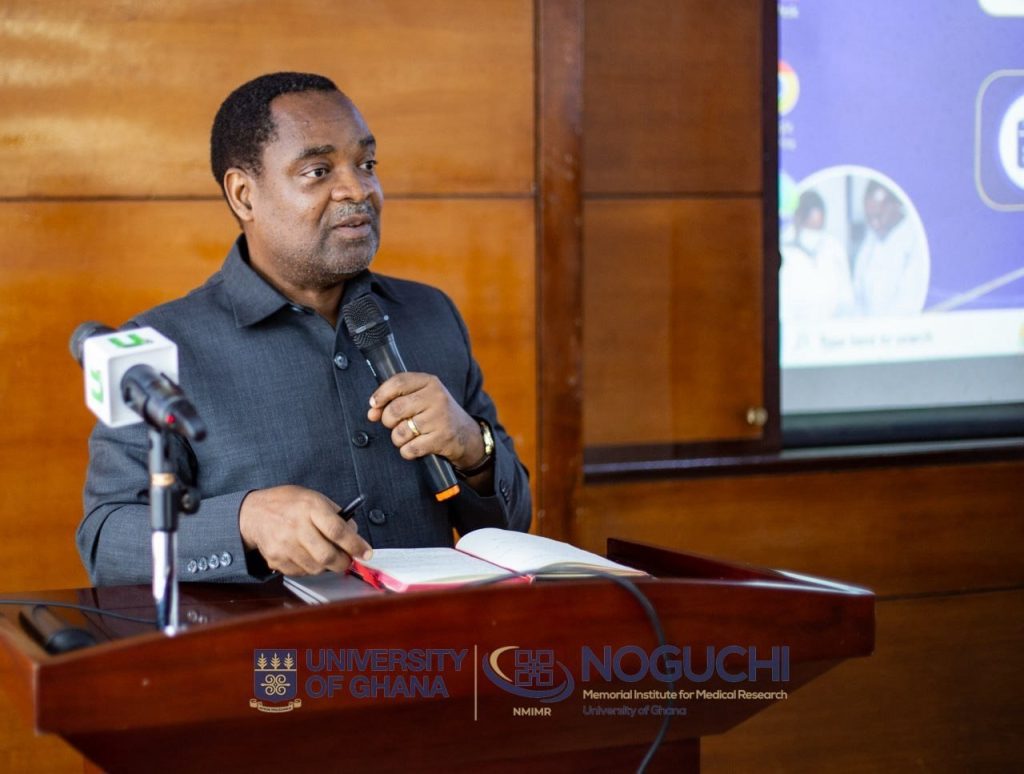
Professor Alfred Edwin Yawson, Provost of the College of Health Sciences, addressing participants during the opening ceremony.
Representing the World Health Organization Country Representative, Dr. Sally-Anne Ohene underscored the critical role of strong and resilient laboratory systems in safeguarding public health across Africa. Drawing on lessons from the COVID-19 pandemic and Ebola outbreaks, she observed that effective laboratory systems are essential for timely disease detection, diagnosis, surveillance and response. She further emphasized that sustainable progress depends not only on infrastructure but also on continuous training, mentorship and collaboration among health professionals and institutions.

Dr. Sally-Anne Ohene, representing the World Health Organization, speaking on the importance of resilient laboratory systems for health security in Africa.
The Chief Representative of JICA-Ghana, Mr. Takayuki Uchiyama, reaffirmed JICA’s commitment to strengthening laboratory capacity and biomedical research networks across Africa. He noted that since 2019, the programme has trained 72 biomedical scientists from West and Central Africa, contributing to improved laboratory services, enhanced disease diagnosis and stronger professional networks. He highlighted the longstanding partnership between JICA and NMIMR, including support for the establishment of the Institute’s Advanced Research Laboratories.
Looking ahead, Mr. Uchiyama noted that 2027 will mark 100 years since Dr. Hideyo Noguchi arrived in Ghana to conduct yellow fever research and 70 years of bilateral cooperation between Ghana and Japan. He reaffirmed JICA’s commitment to deepening collaboration with NMIMR and other partners to advance research, capacity development and health security in Africa.

Mr. Takayuki Uchiyama, Chief Representative of JICA-Ghana, reaffirming JICA’s commitment to strengthening laboratory capacity across Africa.
Representing the Ambassador, Embassy of Japan in Ghana, Mr. Takuma Teratani, First Secretary, reaffirmed Japan’s commitment to strengthening health security and laboratory capacity across Africa. He commended NMIMR and JICA for their continued collaboration and expressed confidence that the programme would enhance participants’ technical competencies while fostering professional networks to strengthen disease surveillance and outbreak response across the continent.

Mr. Takuma Teratani, First Secretary of the Embassy of Japan in Ghana, addressing participants at the opening ceremony.
As participants introduced themselves during the ceremony, the diversity of expertise and representation from across Africa reflected the programme’s broader goal of fostering a network of skilled laboratory professionals capable of supporting disease surveillance, diagnosis and outbreak response in their respective countries.
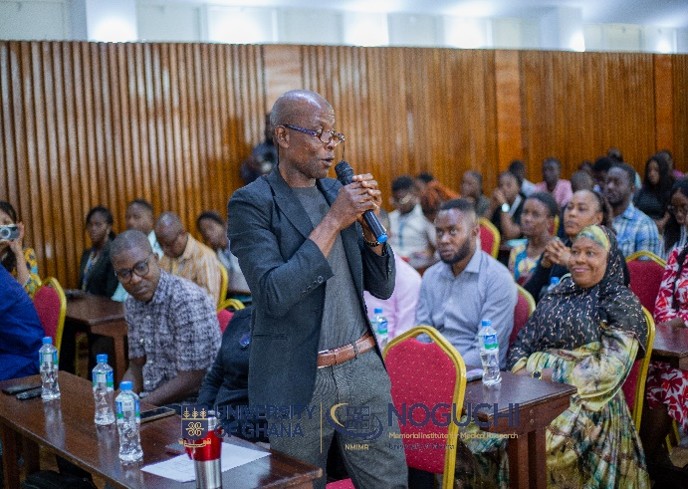
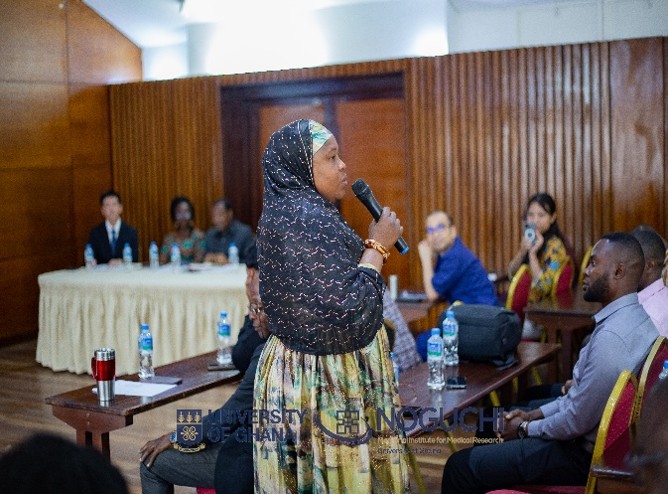
Some 2026 cohort of the Third Country Training Programme share their professional backgrounds and expectations during the self-introduction session.
The training programme forms part of ongoing efforts by NMIMR and its partners to strengthen Africa’s capacity to detect, prevent and respond to infectious disease threats. Through practical laboratory training, knowledge exchange and regional collaboration, the initiative is expected to contribute significantly to improved health security and public health outcomes across the continent.
Photo Highlights from the Ceremony.


